
Perched proudly on the edge of the historic coastal town of Sur in eastern Oman, Al Ayjah Lighthouse Sur stands as a striking symbol of the nation’s rich seafaring legacy. Overlooking the entrance to Sur’s lagoon (khor) and the vibrant traditional dhow harbor, this distinctive three-story beacon has guided generations of Omani sailors, merchants, and fishermen through treacherous coastal waters. Today, the white castle-like tower serves as a celebrated cultural landmark, offering visitors a captivating window into Omani navigation heritage and panoramic views of the Gulf of Oman.
Where Is Al Ayjah Lighthouse Sur and How Do You Get There?
Locating Al Ayjah Lighthouse is straightforward, as it occupies a prominent point along the inlet leading into Sur:
- Geographic Positioning: The lighthouse is situated on the eastern headland of the historic Al Ayjah district in the Sharqiyah Governorate, approximately 200 kilometers southeast of Muscat.
- Crossing the Khor Al Batah Bridge: Travelers approaching from central Sur can reach the site by crossing the iconic Khor Al Batah Suspension Bridge—the first suspension bridge in Oman—which directly connects the main town to the peninsula of Al Ayjah.
- Access and Walkability: Upon crossing the lagoon, a short drive or pleasant coastal walk along paved roads leads straight to the rocky promontory where the lighthouse stands overlooking the bay.
Its Historic Role in Guiding Ships
For centuries, Sur served as one of the Arabian Peninsula’s most vital maritime trade hubs, connecting Oman with East Africa, India, and the Persian Gulf:
- Navigating the Complex Lagoon Entrance: The shallow, narrow opening into Sur’s lagoon (khor) presented significant hazards for incoming wooden vessels, particularly when navigating treacherous sandbars during heavy night seas, low tides, or sudden coastal storms.
- Defensive Watchtower Origins: Before serving as a light beacon, the structure was originally constructed as a strategic defensive watchtower. Its elevated vantage point allowed local guards to monitor approaching ships, defend against hostile raids, and maintain strict control over entry into the inner harbor.
- Conversion to a Functional Lighthouse: As maritime traffic expanded throughout the 19th and 20th centuries, the tower was fitted with light fixtures to emit guiding signals across the Gulf of Oman, helping sea captains line up their course and safely maneuver traditional trading dhows into calm waters.
- Preserving Omani Navigation Heritage: Today, the beacon remains an enduring testament to Oman’s storied seafaring traditions. It represents an era when Sur’s legendary shipbuilders and master mariners relied on coastal landmarks, celestial navigation, and local lighthouses to dominate Indian Ocean trade routes.
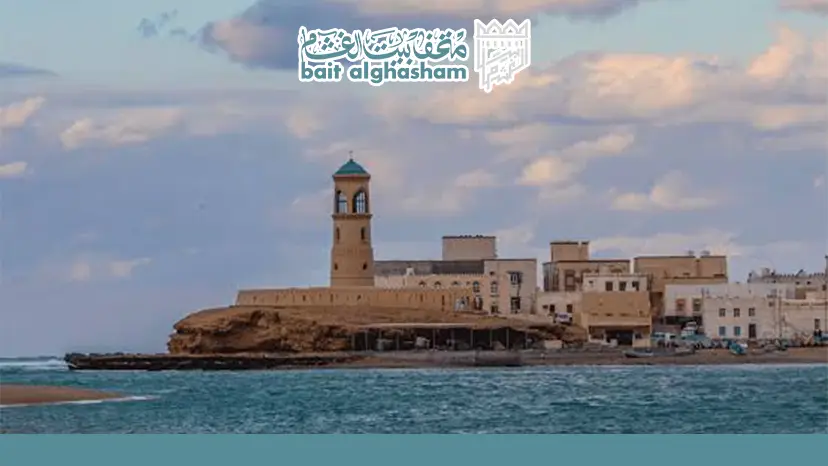
The Surrounding Al Ayjah District Near Al Ayjah Lighthouse Sur and Its Link to Shipbuilding
Visiting Al Ayjah Lighthouse provides an immersive journey through a historic neighborhood where centuries-old maritime traditions remain deeply woven into daily life.
Traditional Coastal Architecture and Historic Alleys
The historic Al Ayjah district retains its distinct old-world charm, characterized by a labyrinth of narrow winding alleys, whitewashed merchant homes, and grand wooden doors featuring intricate Omani and East African carvings. Perched on the surrounding rocky hills, ancient stone watchtowers still stand guard over the headland, reflecting the town’s historical need to protect its prosperous trade settlement.
The Historic Dhow Factory and Unwritten Craftsmanship
Located directly across the lagoon from the lighthouse lies Sur’s famous dhow shipyard—the last active shipyard in the Sultanate dedicated to building handcrafted wooden trading vessels (Sambuks and Ghanjahs). Master shipwrights continue to construct these massive wooden vessels using ancient, unwritten techniques passed down through generations. Without formal blueprints or modern computer designs, craftsmen shape imported teak and local timber entirely by eye and traditional hand tools.
Living Seafaring and Fishing Traditions
The waters framing the Al Ayjah headlands remain a bustling hub of daily maritime activity. Early in the morning and late in the afternoon, the lagoon comes alive as local fishermen launch traditional wooden dhows and modern skiffs into the open sea. Visiting the shore offers a front-row view of fishermen hauling in daily catches, repairing nets along the inlet, and maintaining the unbroken link between Sur and the ocean.
Tour Inland Defensive Strongholds:
Located just a short drive inland from the lighthouse, Bilad Sur Fort provides a fascinating look into the town’s historical defense grid against inland tribal threats.
Best Time to Photograph the Sunset
Al Ayjah Lighthouse is widely considered one of the most picturesque photography locations along Oman’s eastern coastline:
- Golden Hour and Sunset: The late afternoon—roughly an hour before sunset—offers the best lighting conditions. As the sun dips behind the distant Hajar Mountains, the sky transforms into shades of orange, pink, and purple, casting a warm glow over the white lighthouse and calm lagoon waters.
- Blue Hour Lighting: Remaining at the site immediately after sunset allows photographers to capture the lighthouse silhouetted against the darkening sea, with local streetlights and traditional boats reflecting off the water.
- High Tide Conditions: Planning your visit during high tide ensures the lagoon is full of water, creating clear reflections of the lighthouse, bridge, and surrounding watchtowers.
Visit Nearby UNESCO World Heritage Sites:
Just north of Sur lie the coastal ruins of the Ancient City of Qalhat, an ancient medieval trading hub that once shared deep maritime ties with Sur’s mariners.
Architectural Features and Visual Design of the Tower
The Al Ayjah Lighthouse Sur stands out among Omani coastal structures due to its unique blend of traditional military fortification and functional maritime engineering.
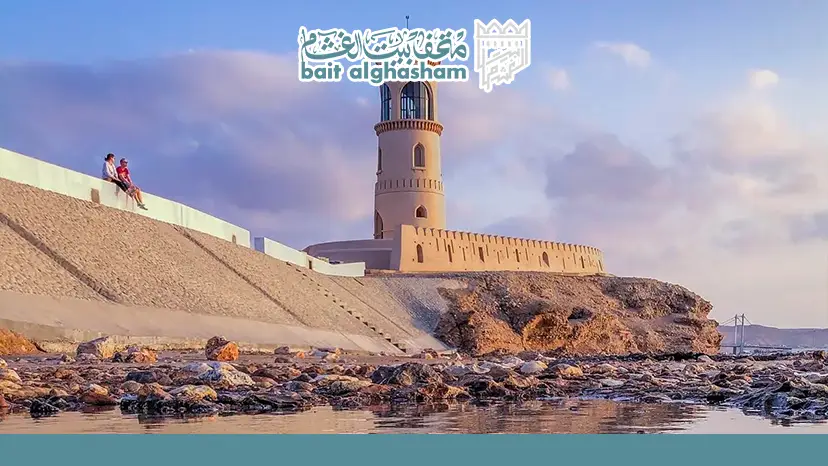
- Castle-Like Exterior: Departing from the utilitarian cylindrical metal frames common in modern navigation, the tower is built as a three-story stone structure with rounded crenellated battlements, defensive parapets, and narrow vertical loop-windows. Its thick, whitewashed plaster walls directly echo the design aesthetic of traditional Omani watchtowers and regional forts (husn).
- Domed Lantern Room: The top tier features a distinctive circular lantern room topped by a smooth, light-blue metal dome. Surrounded by large arched glass openings, this elevated housing originally held the optical light lens and rotating beacon, designed to maximize visibility and project light signals far across the Gulf of Oman.
- Tiered Structural Geometry: The tower is constructed on a circular limestone foundation that slightly tapers as it rises, enhancing structural stability against coastal winds and saltwater erosion. Its middle section incorporates a decorative exterior balcony that provided harbor watchmen with an unobstructed 360-degree platform to observe incoming vessels.
- Integration with Sur’s Fortified Shoreline: Positioned directly alongside historic stone sea walls, the lighthouse was designed to visually harmonize with the surrounding watchtowers dotting the Al Ayjah hills, reinforcing both the tactical defense and visual identity of Sur’s maritime gateway.
Explore Ancient Heritage Across the Sultanate:
Visiting historic harbors and coastal watchtowers offers a captivating entry point into the country’s rich network of archaeological landmarks in Oman.
Nearby Landmarks and Attractions in Sur
Combining a visit to Al Ayjah Lighthouse Sur with other historic and cultural sites in the surrounding area creates a rich, full-day travel itinerary across Sur:
- Khor Al Batah Suspension Bridge: Spanning the mouth of the lagoon, Oman’s only suspension bridge links central Sur directly to the Al Ayjah peninsula. Pedestrians can walk across its paved footpaths to enjoy elevated, panoramic photo opportunities of incoming fishing boats, the dhow shipyard, and the white tower of the lighthouse in the distance.
- Al Ayjah Fort and Hilltop Watchtowers: Set slightly inland on the peninsula, Al Ayjah Fort worked alongside several stone watchtowers built into the surrounding rocky ridges. Exploring these elevated ruins offers visitors a clear understanding of how local forces guarded the harbor entrance and monitored trade routes from both sea and land.
- Sunaysilah Fort and the Sur Corniche: Located in the heart of town, the 300-year-old Sunaysilah Fort features classic round towers, a spacious central courtyard, and historic artifacts. After touring the fort, head to the bustling Sur Corniche for a relaxed evening stroll alongside local families, food trucks, and views of the Gulf of Oman.
Practical Tips for Visitors and Photographers
To make the most of your excursion to Al Ayjah Lighthouse, keep these practical recommendations in mind:
- Parking and Walkways: Ample parking is available near the foot of the Khor Al Batah Bridge and along the Al Ayjah promenade, making it easy to reach the lighthouse on foot.
- Respecting Local Community Privacy: The lighthouse sits at the edge of a quiet residential neighborhood; visitors are encouraged to dress modestly and respect local privacy while taking photos along the narrow alleys.
Discover Coastal and Maritime Highlights:
Travelers looking to combine lighthouse visits, active dhow shipyards, and coastal drives can choose from a variety of expertly guided Oman tours.
Frequently Asked Questions About Al Ayjah Lighthouse
Where is Al Ayjah Lighthouse located?
Al Ayjah Lighthouse is located on the eastern headland of the historic Al Ayjah district in Sur, overlooking the entrance to Sur’s lagoon (khor) in the Ash Sharqiyah South Governorate, approximately 200 kilometers southeast of Muscat.
Is it linked to Sur’s shipbuilding craft?
Yes, the lighthouse directly overlooks the lagoon that historically sheltered Sur’s wooden trading dhows. Located just across the water is Sur’s active dhow factory—the last shipyard in Oman still constructing traditional wooden dhows by hand without modern blueprints.
What is the best time to visit?
The late afternoon roughly an hour before sunset is the best time to visit. This window provides comfortable temperatures, high-tide reflections, and ideal golden hour lighting for capturing the lighthouse, Khor Al Batah Bridge,