
Museums in Oman are gateways to a story that stretches from geological formation and the ancient land of Magan to Indian Ocean trade, the Al Busaidi era, and the country’s modern Renaissance. Together, they preserve archaeological finds, manuscripts, weapons, silverwork, clothing, ships, domestic architecture, natural history, and memories of everyday life. They also explain how Oman’s communities adapted to mountain, desert, and coastal environments through aflaj irrigation, mud-brick construction, natural cooling, date cultivation, and navigation.
No single museum can represent that entire story. National institutions provide a broad chronology; private collections and restored houses reveal family life and craft traditions; regional and specialized museums focus on places or themes such as Dhofar, geology, wildlife, military history, and science.
The ten featured museums are organized by region and type, followed by several worthwhile additions. Choose those that fit your route and interests, and confirm current access, ticketing, and visitor rules directly before setting out.
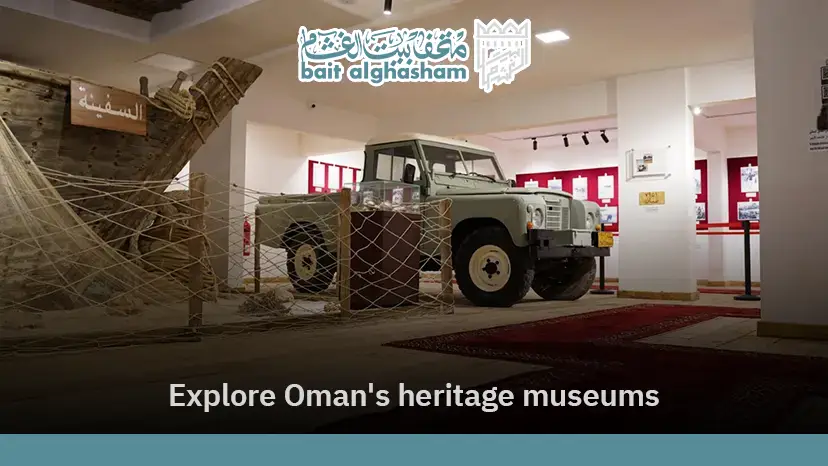 Because good planning starts with knowing your options, everything you need is in a dedicated guide — Collections at Bait Al Ghasham Museum.
National, Private, and Regional Museums: What Is the Difference?
Oman’s museum landscape includes national institutions, private foundations and collections, restored heritage houses, and specialist museums. The categories can overlap.Because good planning starts with knowing your options, everything you need is in a dedicated guide — Cultural Activities at Bait Al Ghasham.
National institutions present a wide account of the Sultanate through major collections, research, conservation, and carefully structured galleries. The National Museum in Old Muscat is the clearest example. Oman Across Ages Museum in Manah also offers a large-scale national narrative, using architecture and multimedia to connect deep geological time with political and social development.
Private museums and foundations use personal collections, family histories, historic houses, and the viewpoint of a collector or cultural foundation. Bait Al Zubair, Bait Adam, and Bait Al Ghasham preserve objects, rooms, stories, and domestic details that differ from a national survey.
Regional and specialist museums concentrate on a place or theme. The Museum of the Frankincense Land is inseparable from Dhofar and Al Baleed, while the Natural History Museum examines Oman’s landscapes and wildlife. The Oman Children’s Museum uses hands-on science rather than a conventional historical collection. For a rounded cultural itinerary, combine at least one national institution with one historic house and one regional or specialized museum.
Muscat: National Collections, Historic Houses, and Specialist Museums
Muscat has the Sultanate’s greatest concentration of museums. Old Muscat is best for national history and heritage collections, Muttrah links museums with the port and corniche, and Al Khuwair and Qurum add natural history and interactive science.
1. The National Museum of Oman — National History and Maritime Heritage
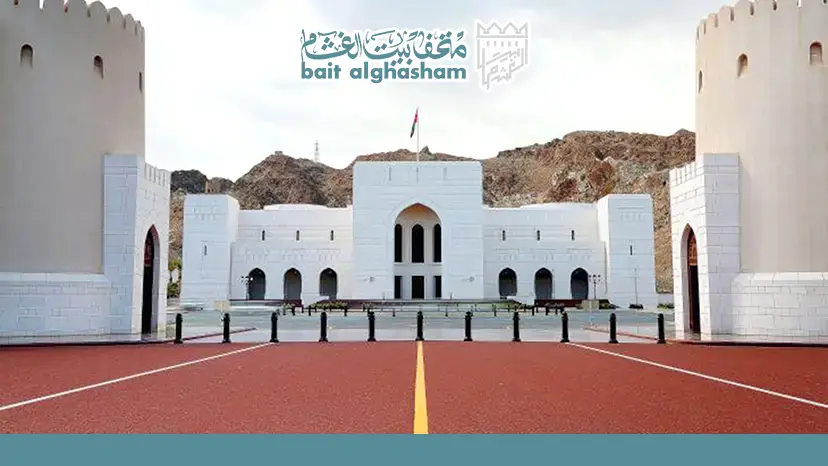
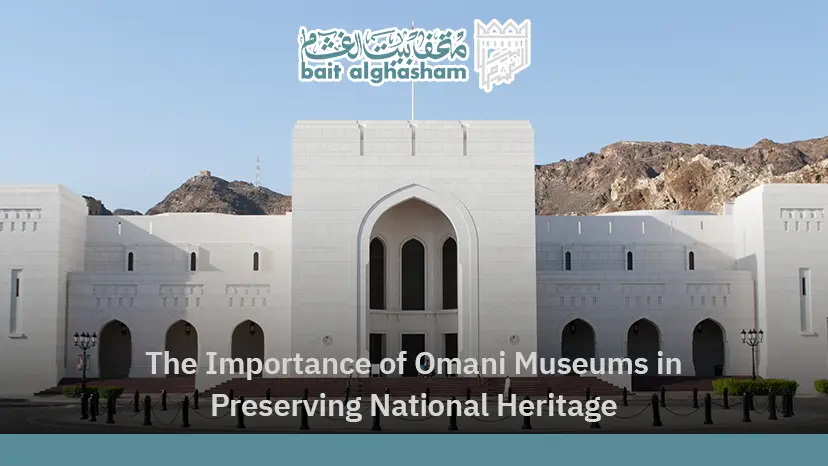
Facing Al Alam Palace in Old Muscat, the National Museum is the Sultanate’s flagship cultural institution and one of the best starting points for first-time visitors. Its 14 permanent galleries hold more than 7,000 objects and guide visitors through Oman’s history, material culture, and international connections. Digital interpretation and an ultra-high-definition cinema support the physical collection rather than replacing it.
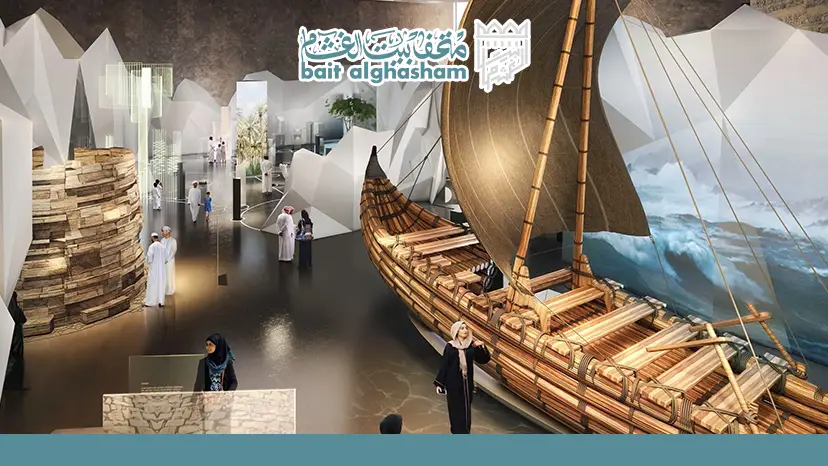
The Maritime History Gallery is especially important. Life-sized reconstructions of Omani dhows help explain how sailors and merchants connected the Arabian Peninsula with India, China, and East Africa. Other displays place weapons, manuscripts, jewelry, and archaeological material within a wider historical narrative. The museum is also notable for adopting Arabic Braille, an accessibility milestone among museums in the Middle East.
Choose the National Museum when you want a comprehensive framework before visiting forts, old settlements, or smaller collections elsewhere in Oman.
2. Bait Al Zubair Museum — Private Heritage and Decorative Arts
Bait Al Zubair is a privately funded cultural complex on Al Saidiya Street in Old Muscat. Its personal scale complements the National Museum nearby. Collections of silver khanjars, traditional clothing, weapons, jewelry, old maps, and family objects offer a detailed view of artistry, status, and daily life in twentieth-century Muscat.
A key feature is Bait Al Dalaleel, a restored mud-and-gypsum house within the complex. Its rooms and construction help visitors understand privacy, majlis culture, and natural cooling before air-conditioning. Rather than presenting architecture as a static shell, the house shows how materials and spatial design responded to climate and social customs.
This is a strong choice for visitors interested in craftsmanship, dress, historic interiors, and the way a private collection can preserve national memory.
3. Muscat Gate Museum — The Story of the Walled City
Muscat Gate Museum occupies the gateway that once marked the approach to walled Old Muscat. Straddling the road, it is both a museum and part of the city’s defensive landscape. Its focused displays trace the walls, historic wells, harbor, and the transformation of Muscat from a sixteenth-century Portuguese trading post into a modern capital.
The elevated position adds context: views extend toward the harbor on one side and the mountains on the other. Compared with the capital’s larger institutions, this is a compact stop, but its subject is distinctive. Visit it to understand why Old Muscat developed where it did, how access to the city was controlled, and how mountain and sea shaped the capital.
4. Bait Al Baranda Museum — Geology and the Growth of Muscat
Set in an early twentieth-century residence with prominent verandas on the Muttrah Corniche, Bait Al Baranda links natural history with urban development. Exhibits explain how tectonic forces formed Oman’s mountains before moving into the history and expansion of Muscat and Muttrah.
Its geological material, including dinosaur fossils, makes the museum useful for visitors who want to look beneath the city’s human history. The setting also makes it easy to connect the displays with the working harbor, waterfront, and surrounding mountains outside. Bait Al Baranda therefore works well as part of a Muttrah walk rather than as an isolated indoor attraction.
5. Bait Adam Museum — A Collector’s View of Diplomacy and Maps
Bait Adam is a privately owned house museum in Madinat Al Sultan Qaboos. The experience resembles entering a collector’s salon more than walking through a conventional institutional gallery. Rare diplomatic gifts, vintage photographs, correspondence, and historical European maps reveal Oman’s external relationships through carefully assembled personal material.
The map collection, charting the Arabian Peninsula from the sixteenth to nineteenth centuries, is a particular strength. It shows how European knowledge and representation of the region changed over time. Because access is primarily by appointment or through specialized local tours, visitors should arrange and confirm entry directly rather than assuming walk-in access.
6. Natural History Museum — Landscapes, Wildlife, and the Whale Hall
The Natural History Museum in Al Khuwair introduces Oman’s varied land and marine environments. Displays include examples of native flora and fauna and taxidermy specimens such as the Arabian leopard, Arabian oryx, and desert caracal. These collections connect familiar landscapes to species that may be rare or difficult to observe in the wild.
The Whale Hall contains the skeleton of a sperm whale that washed ashore in the 1980s. Its scale provides a memorable entry point into Oman’s marine environment. Nature lovers, students, and families can use the museum to understand how mountains, deserts, coasts, and seas support very different forms of life.
7. Oman Children’s Museum — Hands-On Science for Families
Near Qurum, the Oman Children’s Museum is recognizable by its large white geodesic domes. It is a science center designed around interaction rather than a collection of historic objects. Children can explore physics and earth science through hands-on stations, including simulations that demonstrate lightning and earthquakes.
The emphasis on active learning makes it different from every other museum in this top ten. It is particularly useful for families seeking an energetic educational stop, but adults should see it as a specialist learning environment rather than a survey of Omani history. Pair it with a heritage museum if you want both science and culture in the same Muscat itinerary.
Ad Dakhiliyah: A National Story Near Nizwa
8. Oman Across Ages Museum — From Geology to the Renaissance
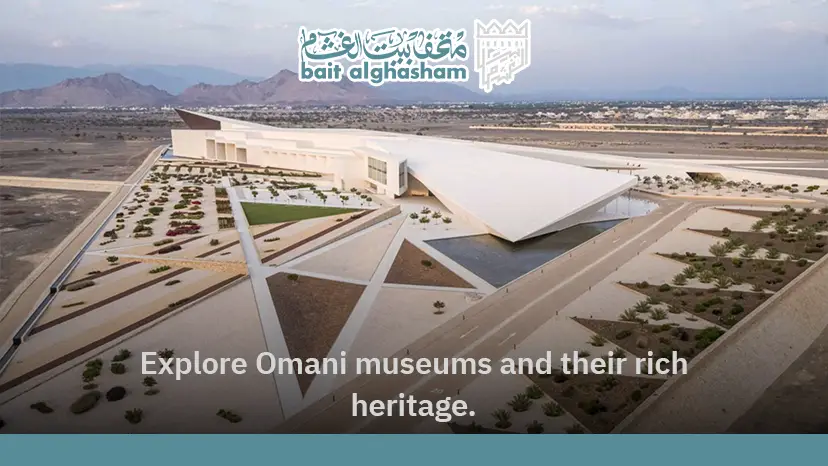
Located in Manah in Ad Dakhiliyah Governorate, near Nizwa, Oman Across Ages Museum presents the country’s story on a monumental scale. Its futuristic geometric architecture echoes the forms of the Al Hajar Mountains, establishing a connection between the building, the land, and the historical narrative inside.
Multimedia, virtual reality, sound, and large cinematic screens guide visitors from Oman’s geological formation through successive eras to the modern Renaissance. The Renaissance Gallery focuses on the country’s development since 1970 through an immersive digital presentation. This approach is especially effective for visitors who enjoy visual interpretation and want to see how natural resources, settlement, state formation, and modernization fit together.
Because it covers both deep time and recent development, Oman Across Ages is more than a museum of objects. It provides a chronological framework that can enrich later visits to Nizwa, traditional villages, forts, and archaeological landscapes.
Al Batinah: A Restored House and Living Architectural Memory
9. Bait Al Ghasham Museum — Family Life in a Fortified Mansion
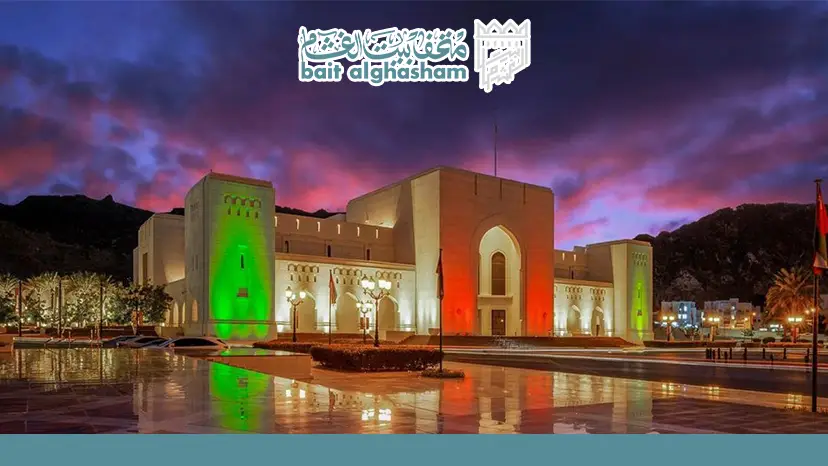
Bait Al Ghasham Museum stands in Afi Village, Wadi Al Maawil. The restored fortified mud-brick mansion is more than two centuries old and dates to the Al Busaidi dynasty. Its rooms, defensive features, storage areas, and construction show how an Omani minister and his family lived, protected the property, and managed essential supplies.
The date-storage rooms are a revealing detail. Original channels in the floor collected date syrup, demonstrating how architecture supported food preservation and household self-sufficiency. Thick walls and the organization of private and communal spaces also help visitors read the building as an environmental and social system, not merely an old residence.
Bait Al Ghasham offers a direct architectural experience that differs from object-led galleries. It is an important stop for understanding domestic heritage, date culture, traditional building techniques, and the relationship between status and daily work.
Book your tour on WhatsApp — +968 9383 8979
Replies within 24–48 hours · Heritage tours from 3 OMR per person
Dhofar: Frankincense, Archaeology, and Indian Ocean Trade
10. Museum of the Frankincense Land — Salalah’s Global Trade Story
The Museum of the Frankincense Land is located within Al Baleed Archaeological Park in Salalah, part of the UNESCO-listed Land of Frankincense. This setting is fundamental to the visit: the museum interprets a landscape that once stood at the center of a trade network supplying frankincense to distant civilizations and empires.
Archaeological displays explain Dhofar’s role in production and exchange, while the Maritime Hall uses ship models and other interpretation to show how Omani sailors navigated the Indian Ocean. The story extends beyond incense to port life, shipbuilding, and the routes linking Oman with India, China, and East Africa.
For visitors to southern Oman, this is the essential museum for connecting the archaeological remains at Al Baleed with the region’s wider commercial and maritime history.
More Omani Museums Worth Adding to Your Route
A top-ten list cannot cover every worthwhile institution. Three additional museums broaden the themes in this guide:
- Bait Al Safah, Al Hamra: Set inside a centuries-old mud house, this heritage museum preserves traditional domestic architecture. Local residents demonstrate activities such as wool spinning and grain milling, turning household history into a living experience. Demonstrations associated with Omani heritage may also introduce crafts and inherited food or coffee traditions.
- Ghalya’s Museum of Modern Art, Muttrah: This museum documents changes in the Omani home between the 1950s and 1970s. It is valuable for visitors interested in the transition from older domestic interiors to more recent ways of living.
- Sultan’s Armed Forces Museum, Muscat: Located in historic Bait Al Falaj Fort, built in 1845, this specialist museum presents Omani military history and the development of weapons across different periods.
These additions are best selected by interest: choose Bait Al Safah for living heritage, Ghalya’s for modern social history, or the Armed Forces Museum for military history in a historic fort setting.
What Museums in Oman Teach Beyond the Displays
Omani museums preserve more than individual artifacts. Restored houses show how thick mud walls, mashrabiya screens, courtyards, and room layouts reduced heat and balanced privacy with hospitality. Models of the UNESCO-listed aflaj system explain water distribution, while date-storage channels reveal household self-sufficiency.
Maritime collections show how wooden vessels such as the ghanjah and sambuq supported navigation and exchange with China, India, and East Africa. Archaeological and geological galleries connect copper and frankincense with early prosperity and Magan.
Social history appears through majlis customs, clothing, silver jewelry, khanjars, coffee preparation, weaving, pottery, and grain milling. Living demonstrations keep skills active, while natural history and science museums connect geology, wildlife, and settlement.
Preservation can include scientific conservation of manuscripts, textiles, weapons, and other sensitive materials. Digital scanning and three-dimensional documentation record mud-brick settlements and support accurate restoration. Digital archives and interactive experiences also make collections more accessible to younger audiences.
How to Plan an Oman Museum Journey
Build an itinerary by geography
Group nearby museums instead of crossing Muscat repeatedly. Old Muscat combines the National Museum, Bait Al Zubair, and Muscat Gate. Muttrah can connect Bait Al Baranda with Ghalya’s Museum and the corniche. Manah and Al Hamra fit naturally into an Ad Dakhiliyah route near Nizwa, while the Museum of the Frankincense Land belongs in a dedicated Salalah and Dhofar itinerary. Bait Al Ghasham can anchor a cultural stop in Wadi Al Maawil.
Match the museum to your interests
Start with the National Museum or Oman Across Ages for a broad national overview. Choose Bait Al Zubair, Bait Al Ghasham, or Bait Al Safah for architecture and everyday life. Select the Frankincense Land museum for archaeology and maritime trade, the Natural History Museum for wildlife, or the Children’s Museum for hands-on family learning. Combining different types avoids repetition and produces a fuller picture of Oman.
Confirm practical details directly
Opening schedules, admission arrangements, appointment requirements, gallery access, and services can change. Check the museum’s official channels shortly before visiting; do not rely on an old itinerary or an unverified listing. Bait Adam in particular should be arranged in advance because access is primarily by appointment or specialized tour.
Ask whether guided tours, audio guides, workshops, or multilingual interpretation are available. During the peak travel season from October to March, advance planning may be useful for major institutions and organized groups. Allow more time for large museums than for focused house museums, and avoid packing several major collections into one rushed day.
Respect dress and photography rules
Modest clothing that covers shoulders and knees is appropriate. Photography policies vary: mobile photography may be permitted in some areas, while flash or all photography may be restricted around sensitive objects or in particular galleries. Follow the signs and staff instructions rather than assuming one rule applies everywhere.
Frequently Asked Questions About Museums in Oman
What are the best museums in Oman for a first visit?
The National Museum provides the most comprehensive introduction in Muscat, while Oman Across Ages offers an immersive chronological journey in Manah. Bait Al Zubair adds private collections and a restored-house perspective. If your route includes Dhofar, the Museum of the Frankincense Land is essential for understanding frankincense and maritime trade.
Which Omani museums are best for families?
The Oman Children’s Museum is designed for hands-on science learning, and the Natural History Museum uses wildlife collections and the Whale Hall to engage young visitors. Oman Across Ages also uses multimedia and immersive interpretation. Family suitability still depends on each child’s interests and the current availability of exhibits.
Where is Oman Across Ages Museum?
It is in Manah, Ad Dakhiliyah Governorate, near Nizwa. Its location makes it suitable for an interior-Oman itinerary that also includes forts, historic towns, and traditional villages.
Why are private museums important in Oman?
Private museums preserve family collections, domestic interiors, historic maps, photographs, clothing, weapons, jewelry, and personal stories. They offer a close view of daily and social life that complements the national narrative presented by larger institutions.
What can visitors learn from Omani heritage houses?
Historic houses show how mud walls, courtyards, screens, room layouts, and storage systems responded to climate, privacy, hospitality, and self-sufficiency. Some also present demonstrations such as weaving, grain milling, pottery, silverwork, or coffee preparation.
Do museums in Oman allow photography?
Policies differ by institution and gallery. Some may allow mobile photography but prohibit flash near sensitive material; others may restrict photography entirely in certain areas. Check displayed guidance and ask staff before taking pictures.
Should tickets or tours be arranged in advance?
Advance arrangements can be helpful during the main tourism season, for groups, or when a museum offers appointment-based access. Confirm directly whether reservations, guided tours, audio guides, or workshops are available. This guide intentionally does not state admission fees or fixed opening hours because those details can change.
How do Omani museums preserve national heritage?
They conserve artifacts and manuscripts, restore historic buildings, document neighborhoods, maintain digital archives, and interpret collections through galleries and interactive media. Living demonstrations also help keep craft knowledge active and connect younger generations with inherited practices.
A well-planned museum journey can therefore do more than fill a day indoors. It gives context to Oman’s forts, ports, mountains, villages, markets, archaeological sites, and living traditions—and turns a sightseeing route into a connected cultural story.
Your Next Step Starts Here
Pick your priorities from this guide, book what needs advance reservation, and leave room to wander. Your heritage trip starts with one message.