
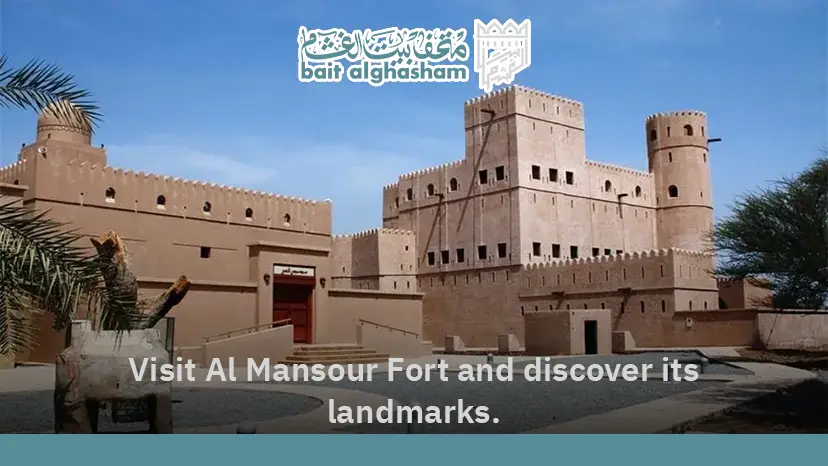
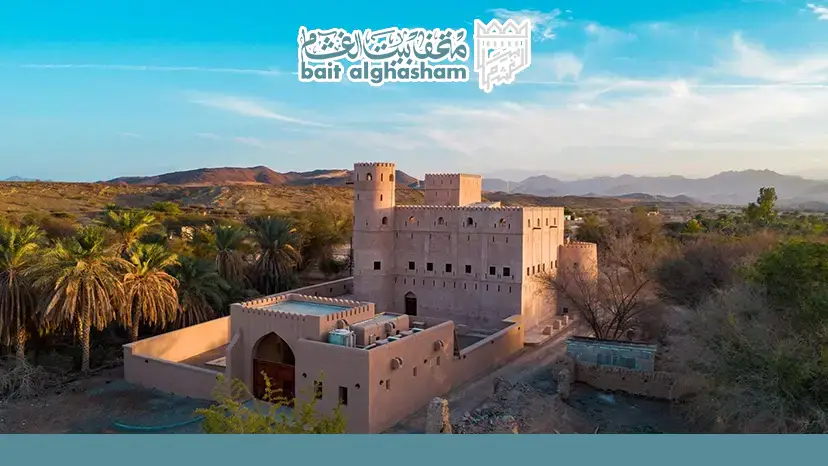
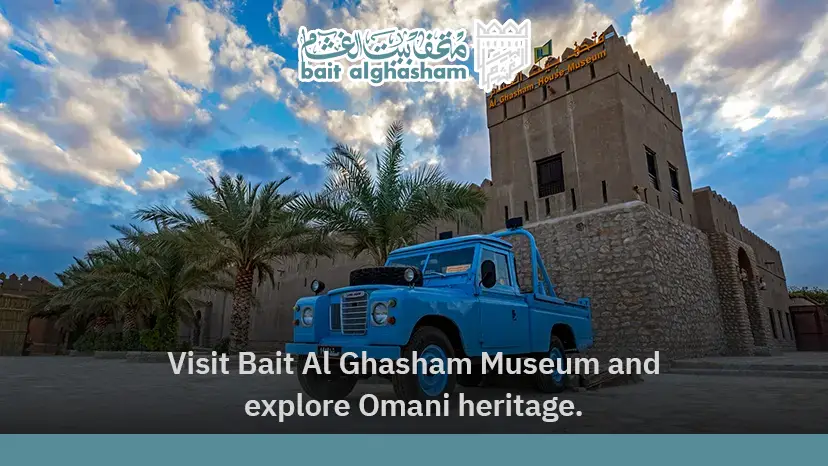
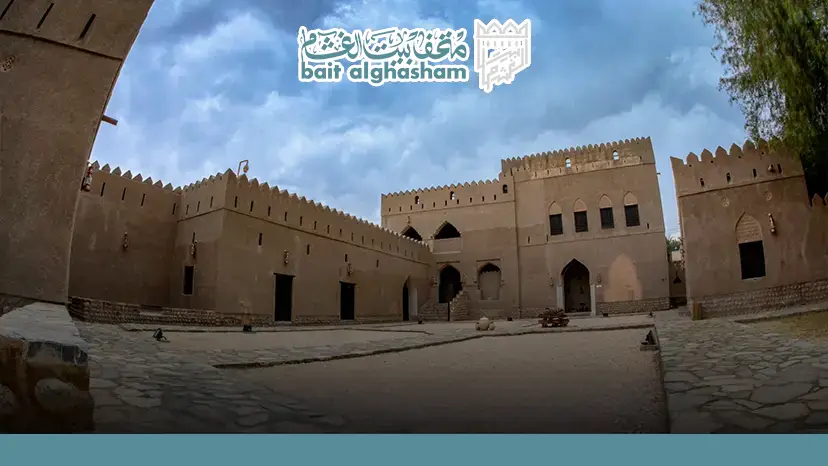
Cultural activities at Bait Al Ghasham introduce Omani heritage through a historic home rather than a conventional display hall. The restored mud-brick estate in Wilayat Wadi Al Maawil is presented as a house with fortified features, residential rooms, an inner courtyard, an old water well and architectural details that reveal how a prominent household once lived.
The experience can include a guided architectural visit, Omani coffee and dates, traditional meals, craft displays, educational programmes and cultural events. These elements do not all operate as daily drop-in attractions. Some are part of an ordinary museum visit, while meals, specialist workshops, dedicated group tours and stage events depend on the museum’s current programme and should be confirmed beforehand. This guide distinguishes between what visitors can explore during a museum visit and what requires advance arrangement.
Begin with a Guided Visit Through the Historic House
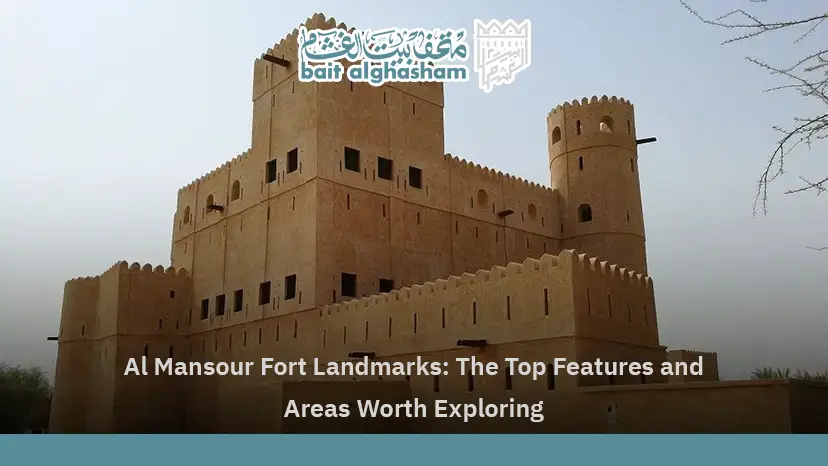
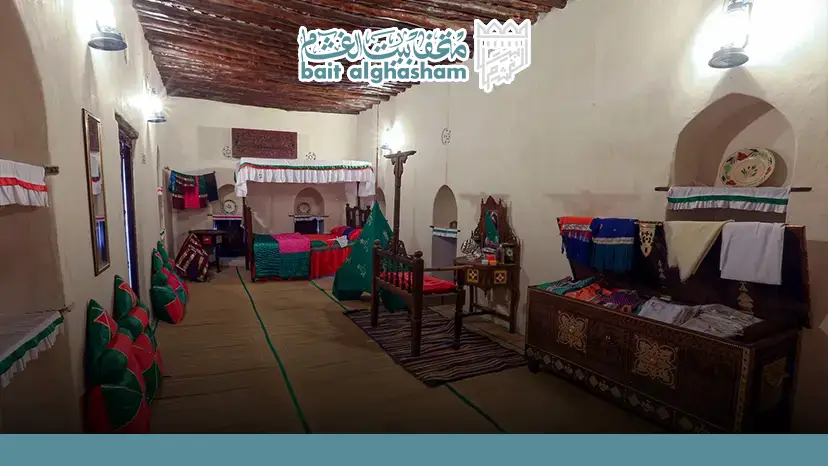
A guided visit gives context to the building before visitors focus on individual cultural activities. The inventory describes 15 distinct rooms, alongside a central courtyard, defensive towers and reinforced areas. Guides can explain how thick mud-brick walls, high ceilings and slit windows contributed to natural cooling and protection. The route also draws attention to the relationship between family life and defence: this was a residence, but its integrated towers and fortified spaces reflect the need to protect both people and resources.
The house rewards close looking. Massive wooden doors carry carved details, while geometric plaster decoration appears around high archways. The old internal water well offers a practical starting point for discussing household self-sufficiency. From the fortified areas, visitors can consider the estate’s setting among the surrounding date palms and see how architecture responded to the local environment.Because good planning starts with knowing your options, everything you need is in a dedicated guide — museum collections.
Visitors may explore at their own pace, but a guide can connect rooms, structures and everyday practices into one story. Photography enthusiasts can also use the tour to identify carvings, inscriptions, plasterwork and mud-brick textures worth documenting.Because good planning starts with knowing your options, everything you need is in a dedicated guide — Museums in Oman.
ADVANCE ARRANGEMENT: Confirm guide availability before travelling if a guided visit is essential. Schools, universities, families seeking a private explanation and other organised groups should request a dedicated guide in advance rather than assume one will be available on arrival.
Experience Omani Hospitality, Coffee and Cooking Traditions
Hospitality turns the museum visit from an architectural tour into a social experience. The activities inventory specifically associates Bait Al Ghasham with Omani coffee—qahwa—served with dates. It also describes demonstrations of roasting, grinding and brewing coffee. When programmed, these steps show that hospitality begins before the cup reaches a guest: preparation, aroma, serving and conversation all form part of the welcome.
Traditional meals provide another link to the life of the house. Families and other visitors may be able to sit together and taste Omani dishes in a heritage setting, experiencing food as a shared custom rather than simply a museum theme. The inventory supports traditional meals and communal dining, but it does not establish a permanent restaurant menu or guarantee a cooking class every day. Visitors interested in Omani cooking should therefore ask whether their date includes a meal, food preparation demonstration or hospitality programme.
This distinction matters. Drinking qahwa with dates may be available as part of hospitality, while a full family meal involves ingredients, preparation and seating. A special food activity may also be tied to an event rather than ordinary opening hours.
ADVANCE ARRANGEMENT REQUIRED: Traditional meals, catering for groups and any participatory Omani cooking activity must be requested and confirmed before the visit. Ask what is included, whether visitors will observe or participate, and whether dietary needs can be accommodated. Do not arrive expecting a meal or hands-on cooking session without confirmation.
See Omani Crafts and Traditional Arts
Craft activity at Bait Al Ghasham can make heritage processes visible. The inventory records live or interactive displays connected with palm-leaf weaving and Batinah pottery. It also identifies textile work, embroidery, silver shaping and engraving as crafts represented in cultural programming. Watching a maker at work reveals the patience behind an object that might otherwise appear as a finished exhibit. Visitors can observe how clay is shaped, how palm material is woven and how patterns are built through repeated hand movements.
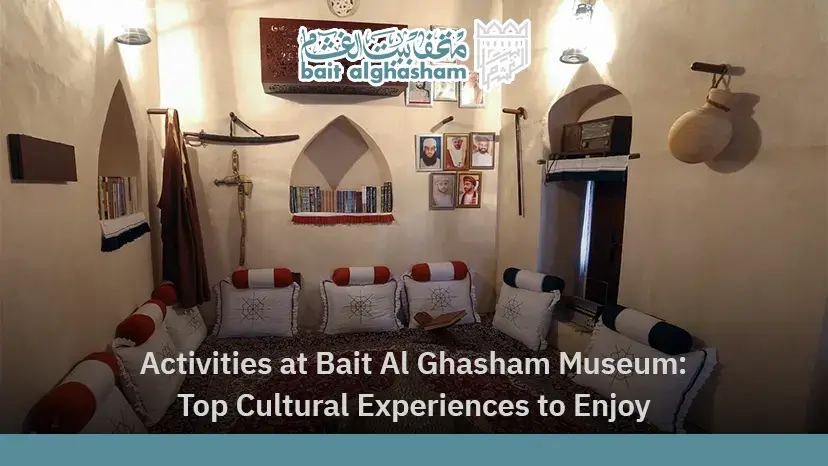
The architecture itself is part of the artistic experience. Carved wooden doors, inscriptions, geometric plasterwork and decorated archways show how practical surfaces became vehicles for skill and design. These fixed details can be appreciated on any accessible tour route, even when no artisan demonstration is scheduled.
Traditional arts extend beyond objects. The programme inventory includes poetry recitations, folk dancing, music, heritage theatre and visual-art displays. These are best understood as programmed gatherings, not continuous performances. A quiet daytime visit may focus on the house and its craftsmanship, while a confirmed festival or theatre night can introduce sound, movement and community participation.
Craft bazaars and evening markets have also formed part of the museum’s event activity. They give artisans a setting in which to present handmade work and allow visitors to meet the people maintaining local practices. Availability, participating crafts and sales arrangements vary by event.
ADVANCE ARRANGEMENT: Check the current schedule if a live artisan demonstration, poetry session, dance, music performance, theatre presentation, art display or craft market is a priority. The house’s decorative features are part of the museum setting, but live traditional arts should never be treated as guaranteed daily entertainment.
Join Workshops and Educational Activities
Bait Al Ghasham has hosted structured programmes that move beyond observation. The inventory records heritage-preservation workshops developed in collaboration with the Ministry of Heritage and Tourism, with subjects including museum curation, artefact conservation and traditional craft preservation. Such workshops support practitioners and learners interested in how heritage is recorded, cared for and passed on.
Educational activities can also use replicas, patterns and facsimile material to make historical ideas easier to understand. The listed programme formats include handling non-historical replica tools, learning about Omani geometric patterning, and reviewing facsimile trade papers and correspondence. These activities can help students connect engineering, calligraphy, design and social history to physical evidence in the house.
Craft workshops may introduce pottery, weaving or silver work when suitable artisans, tools and materials are available. A workshop differs from a demonstration: watching an artisan does not automatically mean every visitor can use the equipment or make an object. Age suitability, capacity, material supply and supervision all need to be agreed with the museum.
ADVANCE ARRANGEMENT REQUIRED: Specialist workshops, hands-on craft sessions and professional heritage training must be booked or confirmed ahead of time. Organisers should request the subject, duration, participant level, maximum capacity, language, materials and any safety requirements directly from the museum. Only advertise a workshop to a group after receiving confirmation for the chosen date.
Book your tour on WhatsApp — +968 9383 8979
Replies within 24–48 hours · Heritage tours from 3 OMR per person
Plan Family and Student Group Visits
Families can explore the relationship between household spaces and Omani daily life together. The inner courtyard, known as the housh, provides an open central area from which to understand the layout. The old water well encourages discussion about how a household managed an essential resource, while rooms, doors, towers and shaded spaces create a sequence of discoveries for different ages. Adults can focus on restoration and design as children learn through questions and observation.
The museum inventory also records family-oriented storytelling, heritage games and trivia-style activities as event formats. These can make history approachable for younger visitors, but they depend on the programme. Families should supervise children throughout the historic property and follow staff instructions around wells, stairs, towers, uneven surfaces and protected features.
For schools and universities, specialised tours can connect the site with Omani history, ancient engineering and social structures. A field trip might focus on natural cooling, building materials, domestic organisation, resource management or traditional crafts. Older students may benefit from sessions on museum curation, conservation or historical documents when those programmes are available.
Teachers will get more value from the visit by giving the museum the learning goal and student age range in advance. This allows staff to explain what can realistically be offered instead of forcing a general public visit to serve as a specialist lesson.
ADVANCE ARRANGEMENT REQUIRED FOR GROUPS: Schools, universities and large family groups should contact the museum early to request a date, dedicated guide and appropriate educational content. Confirm group capacity, accessibility, supervision expectations, photography rules, food arrangements and whether any workshop or event is included. The inventory does not support assuming a standard package for every group.
Attend Cultural and Community Events
Bait Al Ghasham also serves as a community venue. Its outdoor amphitheatre is described as seating more than 1,000 spectators, and the museum inventory states that the site has hosted more than 20 cultural and educational events. Recorded formats include cultural festivals, craft bazaars, heritage theatre nights, folk dancing, music, poetry, art displays, seminars and book-related gatherings.
Some programming follows national, religious or agricultural occasions. The inventory mentions National Day and Eid activities, Ramadan gatherings, date-harvest themes and cooler-season outdoor festivals. Possible components include communal meals, children’s traditions, storytelling, craft activity, markets and performances. These examples show the range of events associated with the venue; they are not a fixed annual timetable and should not be presented as confirmed for a future date without an official announcement.
Events can offer a more animated experience than an ordinary visit, but they also change practical planning. Stage seating, arrival time, food service, market vendors and access to museum rooms may differ from normal operations. Families and groups should ask whether the event is public, whether registration or tickets are required and which activities are actually included.
ADVANCE ARRANGEMENT / SCHEDULE CHECK REQUIRED: Confirm the event title, date, start time, audience, admission process and programme before making a special journey. Do not rely on a previous festival description as proof that the same event will return.
How to Plan the Right Cultural Experience
Start by deciding what matters most: the historic architecture, a guided explanation, family learning, craft observation, Omani hospitality, a workshop or a public event. A standard visit can centre on the rooms, courtyard, well, towers, carved doors and plaster decoration. Everything dependent on staff, artisans, food preparation, specialist materials or stage programming deserves confirmation.
When contacting the museum, provide the intended date, arrival time, number of adults and children, group type, preferred language and any accessibility needs. Ask one direct question for each priority: Is a guide available? Is qahwa service included? Can a traditional meal be arranged? Is a craft demonstration scheduled? Is the activity observational or hands-on? Is an event confirmed and open to the public?
Dress modestly, with shoulders and knees covered, and choose footwear appropriate for a historic building with steps and uneven surfaces. Ask before photographing people, artisans or performers. If photography is a major goal, early or late daylight can bring out the textures of mud brick, wood and plaster, but access must still follow museum hours and event rules.
FAQs About Cultural Activities at Bait Al Ghasham
What cultural activities can visitors experience at Bait Al Ghasham?
Visitors can explore the historic rooms, courtyard, water well, defensive features, wooden carvings and plaster decoration. Depending on the confirmed programme, they may also join a guided visit, receive Omani coffee and dates, arrange a traditional meal, watch craft demonstrations, attend a workshop or take part in a cultural event.
Are guided visits available?
Guided architectural visits are included in the activities inventory and can explain the house’s 15 rooms, natural-cooling features, household organisation and fortified design. Confirm availability in advance, especially for a private, specialist, school or university tour.
Can visitors try Omani food or a cooking activity?
The inventory supports qahwa with dates and traditional Omani meals. Coffee preparation demonstrations are also described. A full meal, catering or participatory cooking activity requires advance confirmation; no daily menu or permanent drop-in cooking class is established in the inventory.
Are craft workshops available every day?
No daily workshop schedule is established. Palm-leaf weaving, pottery, textiles, embroidery and silver work appear in the recorded cultural programming, but a demonstration is not the same as a hands-on class. Confirm the craft, artisan, capacity, materials and participant requirements before visiting.
Is Bait Al Ghasham suitable for families?
Families can use the courtyard and historic features to learn about Omani household life, water management, architecture and craftsmanship. Storytelling, heritage games and other child-focused activities may be available during scheduled programmes. Adults should supervise children and follow staff directions throughout the property.
Can schools and universities arrange educational visits?
Yes. The inventory records specialised field trips and educational tours for schools and universities, as well as heritage-preservation workshops. Groups should arrange the visit early and confirm the learning focus, guide, capacity, duration and any workshop component.
Does the museum hold festivals and performances?
The venue has hosted cultural and educational events in its outdoor amphitheatre, including festivals, craft bazaars, heritage theatre, poetry, music and folk dance. These are scheduled events rather than daily attractions. Check the current official programme before travelling.
Which activities require advance arrangement?
Dedicated guides for organised groups, traditional meals, group catering, hands-on cooking, specialist workshops, craft participation, school and university programmes, and attendance at date-specific events all require advance arrangement or explicit confirmation. Live demonstrations and performances should also be schedule-checked.
Your Next Step Starts Here
Pick your priorities from this guide, book what needs advance reservation, and leave room to wander. Your heritage trip starts with one message.