
Collections at Bait Al Ghasham Museum — this guide gathers everything you need before planning your visit: top places, best seasons, and short practical tips.
The collections at Bait Al Ghasham Museum turn a historic Omani residence into a record of how people cooked, stored food, welcomed guests, dressed, traded, managed water and protected a household. Its mud-brick walls, plasterwork, wooden doors, shutters and ceiling beams belong to the same material story as the objects inside.
Household tools, hospitality objects, adornments, textiles, weapons, economic instruments and records offer several ways into Omani history. A coffee pot speaks about generosity as well as metalwork; a grain grinder points to labour and food security; and a silver bracelet can express craftsmanship, wealth and ceremonial identity. This guide classifies only objects named in the museum’s current content inventory.
How to Read the Collections
Museum categories are useful, but historic objects rarely fit into only one. A dagger may be defensive, ceremonial and decorative. A chest may be practical storage, valued furnishing and evidence of traded materials. Clothing can answer questions about technique, occasion, modesty and regional style. Look beyond an object’s name: What is it made from? What work did it perform? Who might have used it? What does its placement add?Because good planning starts with knowing your options, everything you need is in a dedicated guide — cultural activities at the museum.
Bait Al Ghasham’s setting makes that final question important. Domestic objects make more sense alongside kitchens, storage areas, reception rooms, the courtyard and water system. Weapons and guard equipment belong to a residence whose fortified elements communicated security. The result is a layered picture of household life, status, craft and responsibility.Because good planning starts with knowing your options, everything you need is in a dedicated guide — Museums in Oman.
Household, Food and Storage Collections
The domestic collection includes copper cooking pots, stone grain grinders, woven date-palm storage baskets, clay vessels and wooden chests with brass studs. These are working objects rather than decorative background. They show that feeding a household depended on repeated physical labour, durable containers and careful management of seasonal resources.
The grain grinders are particularly direct evidence of the effort behind everyday food. Before grain became a meal, it had to be processed by hand. Copper pots point to cooking on a scale that could serve a family or gathering, while date-palm baskets connect household storage to a locally available plant material. Clay vessels used for water demonstrate how material choice could support a practical need in a hot climate. Wooden chests protected possessions and organised interior space; their brass studs also made a functional object visually distinctive.
Together, these artifacts reveal self-sufficiency as a system. Food preparation relied on tools, storage knowledge and the coordination of work. Nothing in this category should be dismissed as merely ordinary. Everyday objects often preserve the clearest evidence of routines that written histories overlook.
Coffee, Incense and the Material Culture of Hospitality
Coffee pots appear in both copper and brass in the inventory, and incense burners are represented in clay and silver. Traditional woven floor mats complete a group associated with receiving people and creating a hospitable interior. These objects help explain why Omani hospitality is not an abstract value: it is enacted through preparation, serving, scent, seating and attention to guests.
A coffee pot has a practical function, but its form and material also carry social meaning. The making and serving of coffee structure an encounter between host and visitor. Incense burners introduce fragrance into that setting, while floor mats organise shared space. Viewed together, the pieces show how a room could be prepared for conversation, welcome and community relationships.
Visitors should notice differences in material without automatically treating the most ornate object as the most important. Clay, copper, brass, silver and woven palm products each required specific knowledge. Their coexistence demonstrates a household culture in which artistry was embedded in useful things.
Water, Agriculture and Household Self-Sufficiency
Wooden pulleys, leather water buckets and agricultural implements form another practical collection. Their relationship to the internal well system links movable objects to architecture and to the daily task of securing water. In a large residence, drawing and distributing water supported drinking, food preparation, cleaning and the wider operation of the household.
These tools reveal adaptation to place. Wood and leather were shaped into equipment able to perform demanding repeated work. Agricultural implements connect the home to cultivation and seasonal cycles beyond its rooms. Their worn or simple appearance should not make them seem less significant than silverwork or weapons. They represent knowledge carried through use: how to lift, measure, maintain, repair and conserve essential resources.
This category also helps visitors understand that self-sufficiency did not mean isolation. A functioning household depended on cooperation among people with different skills and responsibilities. The tools make that often-invisible organisation tangible.
Silverwork, Jewelry and Personal Adornment
The inventory identifies silver bracelets, necklaces, anklets and rings, together with carved eyeliner containers and silver-decorated daggers. These artifacts demonstrate the close relationship between personal appearance, skilled metalwork, ceremonial presentation and social status.
Heavy bridal bracelets and other adornments could communicate wealth and mark important stages of life. Their value, however, lies in more than the quantity of silver. Wire-work, filigree, carved details and geometric marks direct attention to the craft knowledge needed to shape and finish metal. Small features reward slow observation because they show the decisions of individual makers.
Personal objects can be tempting to interpret too confidently. A visitor cannot reconstruct a wearer’s complete identity from a necklace or anklet alone. A better approach is to compare technique, scale, material and signs of use, then ask a guide what documentation supports the display. This keeps interpretation grounded while still recognising adornment as evidence of family life, artistry and public presentation.
Textiles and Dress
The textile group includes regional costumes, traditional garments, dresses and embroidered caps. Silk and cotton are named in the inventory, along with hand-woven and finely stitched examples. These pieces show that dress combined practical skill with social expression. Fabric choice, cut, colour and embroidery could communicate regional style, modesty and the importance of a particular occasion.
Textiles also preserve labour that is easy to underestimate. Spinning, weaving, cutting and stitching demand time and precision, while geometric embroidery turns a wearable object into a surface for design. When studying a garment, look at seams, repeated motifs and the relationship between decoration and construction rather than focusing only on bright colour.
Because old fibres are vulnerable to light, movement, dust and changes in humidity, textile displays may be dimmer or more protected than metal and stone objects. That is a conservation decision, not a barrier to appreciation. Taking time to let the eye adjust is more respectful—and often more revealing—than using a camera flash.
Book your tour on WhatsApp — +968 9383 8979
Replies within 24–48 hours · Heritage tours from 3 OMR per person
Weapons, Defense and Ceremonial Status
The weapons inventory includes daggers, muskets, swords and long-barrel rifles, as well as broader guard equipment. Their iron, wood and silver components bring several crafts together. Some pieces belong to the history of defense, while ornate dagger decoration also points to ceremonial status and prestige.
These objects should be read alongside the residence’s fortified character rather than as isolated symbols of conflict. Security was part of protecting people, water, stored food and household resources. At the same time, intricate silver wire-work on a dagger demonstrates that an object associated with defense could also communicate identity and craftsmanship.
Avoid assigning a specific battle, owner or date unless the museum label or guide provides that evidence. The collection supports broader conclusions about preparedness, status and metalworking; it does not justify invented biographies for individual objects.
Trade, Measurement and Written Memory
Coins and currency, scales and weights, family documents, letters and local records form a collection concerned with exchange and memory. Economic instruments indicate that value had to be counted, compared and measured. The presence of currency can be considered in relation to Oman’s maritime connections, while scales and weights make the mechanics of trade more visible.
Wooden chests with brass studs also belong in this conversation because useful containers could reflect access to materials and objects circulating through wider networks. Such evidence should be handled carefully: one chest or coin does not map an entire route by itself. Together with documented context, however, these objects can prompt questions about what entered the household, what left it and how transactions were recorded.
Letters, family documents and local records preserve a different kind of evidence. They connect material culture to names, decisions and community roles that objects alone may not explain. They also remind visitors that a historic house holds both public and private histories.
The House as the Largest Collection Object
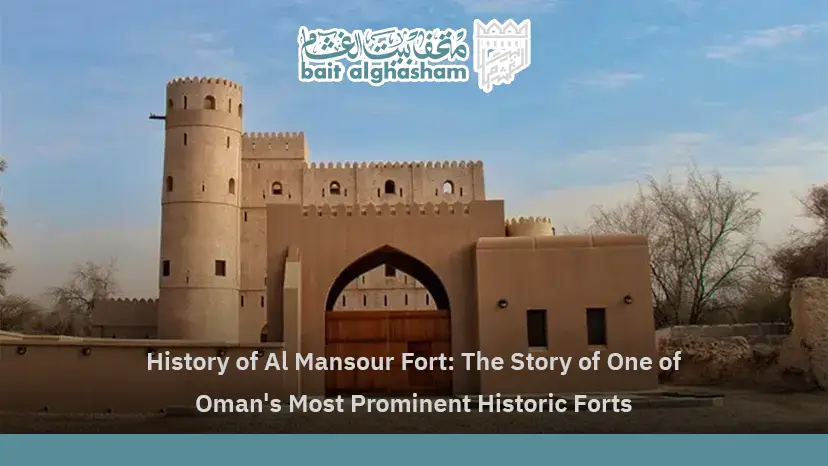
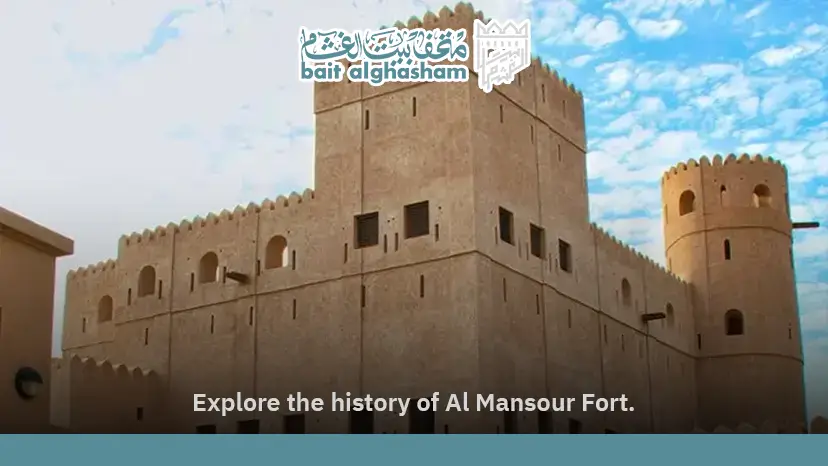
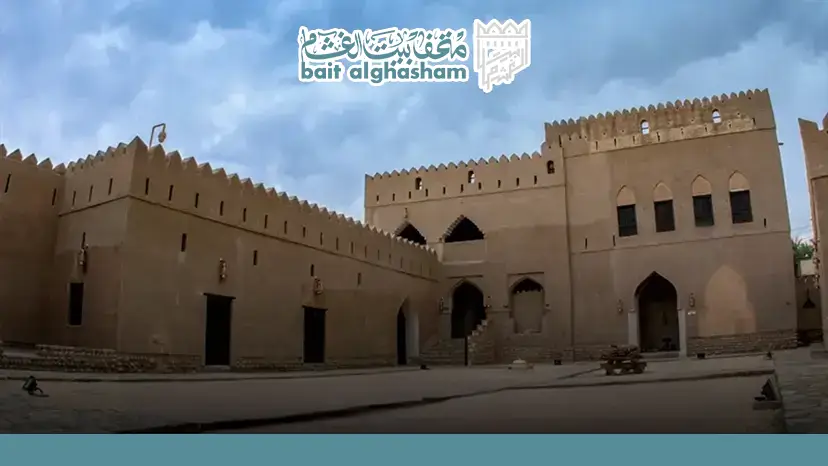
Mud-brick walls, indigenous mountain stones, traditional plaster, carved wooden doors, heavy shutters, geometric wall plasterwork and painted wooden ceiling beams are all named in the inventory. They should be viewed as a structural collection in their own right. The house records knowledge of local materials, climate-responsive construction, security and interior design.
Thick mud-brick walls support passive cooling. Plaster protects surfaces while allowing traditional walls to function, and stone reinforces foundations. Doors and shutters manage movement, privacy, light and air; carving and painted details show that these practical elements also carried artistic ambition. Looking up, down and through openings can therefore be as informative as studying a display case.
Visitors should not lean against old walls, test shutters or touch carved wood. Architectural surfaces can be damaged gradually by abrasion and skin oils, even when no immediate mark is visible.
Conservation: Caring for Different Materials
A mixed collection requires different approaches. The conservation information in the inventory describes breathable clay-based exterior plaster, local stone reinforcement and natural oil treatment for wooden beams. It also notes controlled ventilation and shielding sensitive objects from direct sunlight. These measures address moisture, heat, insects and light without separating the objects from the historic building that gives them meaning.
Collection care changes by material. Non-abrasive cleaning is identified for silver jewelry; acid-free mounts help distribute the weight of old garments; and protective wax coatings are used on iron firearm components to limit contact with ambient moisture. Textiles need support and low light, iron needs protection from corrosion, silver requires careful surface treatment, and wood must be monitored for pests and environmental change.
Conservation is not about making every item look new. Over-cleaning can erase tool marks, finishes and evidence of age. Good care stabilises material, records change and preserves as much original evidence as possible. The building needs the same restraint: compatible repairs protect historic fabric better than visually neat but unsuitable modern replacements.
Respectful Viewing and Photography
A respectful visit protects both the collection and the experience of other people. Keep hands away from exposed chests, woodwork, walls, textiles and metal objects. Follow barriers and staff directions, and do not move furnishings to improve a photograph. Food and drink should remain outside collection areas when instructed.
Disable flash before entering. Repeated bright light contributes to the deterioration of sensitive dyes, fibres, paper and finishes. Use available light, steady the camera without resting it on an artifact, and accept that some rooms are intentionally dim. Ask staff about current photography rules, especially for documents or fragile displays.
Photography etiquette also applies to people. Request permission before photographing guides, staff or other visitors, and avoid blocking narrow rooms while composing an image. A camera should support observation rather than replace it. Spend time with labels, compare materials and ask grounded questions about purpose, technique and provenance.
Frequently Asked Questions
What types of collections are at Bait Al Ghasham Museum?
The inventory supports household and food tools, coffee and incense objects, water and agricultural equipment, silver adornments, textiles, weapons, trade and measurement items, family records, and architectural features. Together they document domestic work, hospitality, status, security, exchange and craftsmanship.
Which household artifacts can visitors learn about?
Named items include copper cooking pots, stone grain grinders, date-palm baskets, clay water vessels, wooden chests, coffee pots, incense burners, floor mats, pulleys, leather water buckets and agricultural implements.
What do the artifacts reveal about Omani life?
They show that a historic household depended on organised labour, food storage, water management, skilled craft, hospitality and protection. Jewelry and dress add evidence about ceremonial life and status, while coins, weights and records connect the residence to exchange and community memory.
Are all weapons in the museum purely military objects?
No. Daggers, muskets, swords and rifles relate to defense, but decorated daggers also communicate craftsmanship and ceremonial status. Interpretation should follow the evidence on labels or provided by guides rather than assigning an undocumented owner or event.
Why are some textiles displayed in low light?
Light can fade dyes and weaken old fibres. Lower light, protective mounts and stable environmental conditions help conserve dresses, garments and embroidered caps. Visitors should never use flash to compensate for a dim display.
May visitors photograph the collections?
Photography rules can change, so ask museum staff on arrival. If photography is permitted, switch off flash, keep clear of barriers, do not touch or reposition objects, and ask permission before including people in the frame.
How can I get more from a visit?
Move slowly, compare materials across categories and read the building as part of the collection. Look at tool marks, stitching, metal decoration, doors, plaster and ceiling beams. A guide can help distinguish documented history from assumptions and explain the context of particular displays.
Your Next Step Starts Here
Pick your priorities from this guide, book what needs advance reservation, and leave room to wander. Your heritage trip starts with one message.