
Oman children’s museum is a pioneering gem among the most prominent Oman museums. It blends education with play, making it a must-visit; read on to learn more.
Location of Oman Children’s Museum in Muscat
Finding the exact Oman Children’s Museum in Muscat is incredibly easy, as it occupies a highly prominent position in the city’s urban landscape. The museum is strategically located in the Shatti Al Qurum area, right next to the beautiful Qurum Natural Park.
Situated just off Sultan Qaboos Street, its central location makes it highly accessible by car, taxi, or public transport from any part of the capital, allowing families to easily combine their educational tour with an afternoon at the nearby beach or park.
If you are looking to combine your scientific tour with a deep dive into Oman’s unique wildlife, geology, and whale fossils, explore our guide to the nearby Natural History Museum.
History and Establishment of Oman Children’s Museum

The Children’s Museum Muscat holds a deeply historic and prestigious place in the Sultanate’s modern cultural and educational development. Its foundational milestones include:
- Royal Vision and Directives: The museum was established under the direct royal vision and generous directives of the late His Majesty Sultan Qaboos bin Said, who prioritized human capital and early childhood education as core pillars of the Omani Renaissance.
- A Historic National Day Inauguration: The institution officially opened its doors on November 17, 1990. The grand opening was strategically timed to coincide with the Sultanate’s celebrations of its milestone 20th National Day, marking a new era for educational landmarks in the country.
- A Regional Pioneer in the GCC: Upon its launch, it achieved a major regional milestone by becoming the very first specialized, interactive science center dedicated entirely to children within the Gulf Cooperation Council (GCC) region, setting a blueprint for neighboring countries.
- Iconic Architectural Landmarks: The museum is housed inside two spectacular, eye-catching white geodesic domes that have become an iconic part of Muscat’s skyline. Spanning a massive area of over 10,000 square feet, this unique design was chosen to evoke a sense of futuristic discovery and scientific wonder.
Purpose and Educational Vision of Oman Children’s Museum
The core purpose and vision behind the Children’s Museum Oman is to simplify science and technology, making them highly accessible, engaging, and fun for the younger generation. The institution’s educational philosophy is built upon several key strategic goals:
- Promoting “Active Discovery” Learning: The museum’s educational framework revolves around human cognitive development through hands-on interaction. By encouraging children to touch, build, and experiment, the institution transforms abstract theories into tangible, memorable concepts.
- Breaking Away from Traditional Classrooms: A primary objective of the museum is to step away from strict traditional classrooms and static textbook learning. It provides an open, pressure-free environment where failure in an experiment is treated merely as a step toward discovery, boosting children’s problem-solving confidence.
- Inspiring a Lifelong Passion for STEM: The museum is carefully curated to ignite a genuine, lifelong passion for Science, Technology, Engineering, Space Exploration, and Mathematics (STEM) among Omani youth. It connects foundational scientific principles with real-world applications and future career paths.
- Preparing Youth for a Tech-Driven Future: By introducing children to computing, mechanical physics, and innovative thinking at an early age, the museum plays a vital role in preparing the next generation for a fast-evolving, tech-driven global economy, aligning with Oman’s national socioeconomic visions.
For another unique, family-friendly heritage stop that showcases rare coins, historical maps, and personal artifacts in Muscat, don’t miss our review of Bait Adam Museum.
Interactive Exhibits at Oman Children’s Museum
Inside the famous white domes, the museum does away with traditional “do not touch” signs, encouraging children to interact directly with everything they see. A typical visit the Children’s Museum Muscat allows young explorers to engage with diverse, interactive exhibits, including:
- The Mirages and Illusion Wall: Displays that challenge visual perception and explain how light, mirrors, and human eyes interact.
- The Human Anatomy Models: Interactive, oversized puzzles and models that allow kids to explore human organs, the skeleton, and how the five senses function.
- The Electricity and Magnetism Station: Safe, hands-on experiments featuring static electricity generators and magnetic fields that bring physics to life.
Science and Learning Activities for Children
Beyond the static displays, the Children’s Museum Muscat features dedicated discovery zones where complex science is simplified through physical action and play. The most prominent learning activities include:
- Exploring Fluid Dynamics with Giant Soap Bubbles: Children can step completely inside a life-sized, giant soap bubble setup. This highly popular activity allows them to observe chemical structures firsthand, learning about surface tension, light reflection, and the delicate properties of liquids through direct visual experience.
- Understanding Electrical Currents and Lightning: The museum provides safe, simulated environments where kids can trigger an indoor lightning bolt or manipulate static electricity generators. This activity demystifies how electrical currents flow, how energy is generated, and how safety measures work in daily power usage.
- Mastering Mechanical Engineering Laws: Through dedicated hands-on stations equipped with real pulley systems, levers, and interlocking gears, young visitors can experiment with lifting heavy objects. This active play allows them to experience fundamental physics laws—such as mechanical advantage, force multiplication, and friction—firsthand.
- Turning Complex Scientific Theories into Tangible Memories: By engaging all five senses, these structured learning activities ensure that abstract physics, chemistry, and engineering concepts are stripped of their academic complexity. Instead, they are transformed into unforgettable, tangible memories that stimulate long-term cognitive development.
Planning an educational itinerary for older kids who love history? Discover the defensive walls and ancient architectural secrets of the capital in our featured post on the Muscat Gate Museum.
Entertainment and Educational Experience for Families
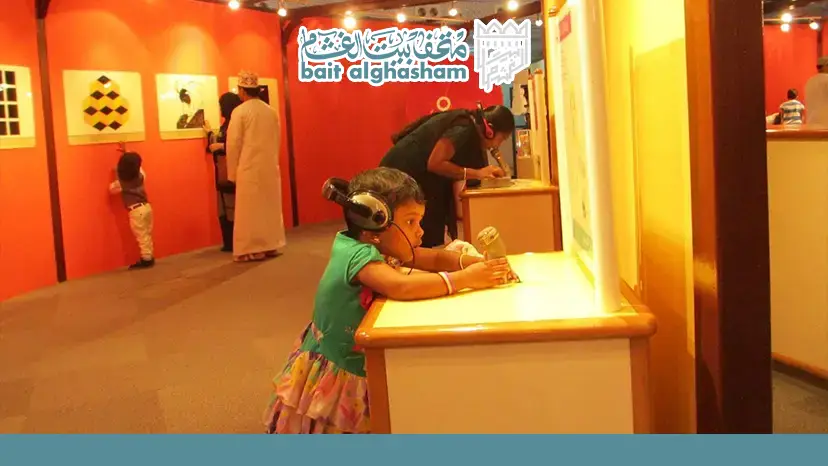
The museum is masterfully designed to offer a perfectly balanced entertainment and educational experience for families, creating a unique space where leisure meets intellectual curiosity. This collaborative environment is achieved through several core aspects:
- Encouraging Multi-Generational Collaboration: Rather than being a passive waiting zone for adults, the museum actively encourages parents to participate right alongside their children. Families work as a team to solve complex scientific riddles, build architectural structures, and test fundamental physical theories, strengthening the parent-child bond.
- Fostering Meaningful Family Bonding: This interactive, collaborative atmosphere turns a standard weekend outing into a deeply meaningful family bonding experience. By sharing the joy of discovery and learning together, families create lasting memories that extend far beyond the museum walls.
- Redefining Educational Spaces: The institution successfully proves that educational spaces can be just as exciting, vibrant, and entertaining as modern amusement parks. It challenges the misconception that learning is boring by wrapping heavy academic subjects in a highly engaging, gamified format.
- Providing a Safe and Wholesome Environment: The museum offers a safe, indoor, and weather-proof environment where families can spend high-quality time together regardless of the season. It serves as a healthy alternative to screen time, encouraging physical movement, verbal communication, and creative thinking among all family members.
Looking for more high-tech interactive discovery?
See how Oman blends cutting-edge technology with immersive storytelling on a massive national scale at the majestic Oman Across Ages Museum in Manah.
Age Groups Suitable for Oman Children’s Museum
While the museum welcomes inquisitive minds of all ages, the exhibits are primarily tailored to suit children between the ages of 3 and 12 years old.
- Toddlers and Preschoolers (Ages 3–5): Enjoy sensory exploration, playing with giant bubbles, soft blocks, and basic shadow displays.
- School-Aged Children (Ages 6–12): Gain the most from the museum, as they can independently run scientific experiments, read the simplified bilingual explanations, and fully comprehend the physics, anatomy, and chemistry concepts on display.
Visitor Experience at Oman Children’s Museum
- ntuitively Structured Thematic Zones: The interior layout inside the iconic white domes is divided into clear, logical thematic zones. This strategic setup allows children to transition naturally and fluidly from one scientific concept to another—such as moving from the physics of light directly into human anatomy—without feeling overwhelmed.
- Premium Comfort and Accessibility Facilities: To ensure a completely comfortable visit for families, the entire facility is fully air-conditioned and well-carpeted, providing a safe environment where toddlers can move around freely. The museum is also fully accessible, featuring smooth pathways for strollers and wheel-chairs, alongside well-maintained public amenities.
- Bilingual Omani Facilitators and Guides: One of the standout features of the museum is its dedicated team of friendly, knowledgeable Omani facilitators stationed throughout the exhibition halls. These educators are always ready to step in, spark conversations, explain complex experiments in both fluent Arabic and English, and safely guide children through the trickier interactive stations.
- A Relaxed, Self-Paced Learning Journey: Unlike structured school classrooms, the visitor experience here is entirely self-paced. Children are given the freedom to spend as much time as they want at any individual exhibit that catches their curiosity, encouraging independent thinking, deep focus, and an authentic joy for scientific exploration.
Opening Hours of Oman Children’s Museum

To plan your trip perfectly, keep in mind the regular operating hours of the Children’s Museum in Muscat:
- Saturday to Thursday: Open in two daily sessions, typically from 9:00 AM to 1:00 PM, and from 4:00 PM to 6:00 PM.
- Fridays: The museum is closed in the morning and usually opens for an evening family session (please verify holiday hours locally before arriving).
- Note for Schools: Morning slots on weekdays are highly popular for organized school field trips.
Entry Fees and Visiting Information
Before you set out to visit the Children’s Museum Muscat, here is the essential visiting information you need to know:
- Entry Fees: Admission fees are kept very nominal and affordable to ensure all families can visit, typically costing just 500 Baisa (0.5 OMR) per person, with special discounted group rates available for school trips.
- Facilities: The museum provides clean public restrooms, accessible pathways for strollers, ample free parking spaces outside the dome, and is surrounded by beautifully landscaped green areas perfect for a post-visit family walk.
The Oman Children’s Museum remains an irreplaceable gem within the Sultanate’s educational and cultural framework. By seamlessly blending hands-on scientific discovery with family entertainment under its iconic white domes, it does more than just teach physics or anatomy it inspires the next generation of Omani innovators, thinkers, and scientists. For families and travelers visiting Muscat, it offers an enriching, deeply meaningful experience that proves learning can be the ultimate adventure.
Frequently Asked Questions About Oman Children’s Museum
Where is Oman Children’s Museum located?
The Children’s Museum in Muscat is strategically located in the Shatti Al Qurum area, right next to the popular Qurum Natural Park. Situated just off Sultan Qaboos Street, its central location makes it highly accessible by car or public transport from any part of the capital.
What is Oman Children’s Museum?
Established in November 1990 under royal directives, it is a pioneering educational institution and the very first specialized interactive science center dedicated to children in the GCC region. It is instantly recognizable by its unique architectural design featuring two spectacular, eye-catching white geodesic domes.
What can children learn at Oman Children’s Museum?
A visit to the Children’s Museum Oman allows young minds to explore fundamental STEM (Science, Technology, Engineering, and Mathematics) concepts through hands-on interaction. Children learn about human anatomy and the five senses, eye illusions and light reflection, static electricity, magnetism, and basic mechanical engineering principles like pulley systems and gears.
Is Oman Children’s Museum suitable for all ages?
While curious minds of all ages can enjoy the exhibits, the museum is primarily tailored and most beneficial for children between the ages of 3 and 12 years old. Preschoolers (ages 3–5) thrive in the sensory exploration and bubble zones, while older school-aged children (ages 6–12) can independently run the experiments and fully comprehend the physics and anatomy concepts on display.
What are the opening hours of Oman Children’s Museum?
The museum is generally open to the public from Saturday to Thursday in two daily shifts: from 9:00 AM to 1:00 PM in the morning, and from 4:00 PM to 6:00 PM in the afternoon. The morning slots on weekdays are highly popular for organized school field trips, and the museum is typically closed on Fridays and official public holidays.
Read More in Arabic: معنى الحصن
Read More in Arabic: قلعه بهلاء
Read More in Arabic: متحف صلالة
Read More in Arabic: الحديقة المائية في صلالة
Read More in Arabic: منتزه قريب