
Places to visit in Sohar — this guide gathers everything you need before planning your visit: top places, best seasons, and short practical tips.
The best places to visit in Sohar reveal a city shaped by the sea, trade, copper and Omani hospitality. Once an important maritime port, Sohar now combines a white coastal fort, traditional markets, a grand mosque, green family parks and long beaches beside the Gulf of Oman. Beyond the urban area, mountain valleys, old villages and unusual springs make the city a useful base for exploring North Al Batinah.
A short visit can focus on Sohar Fort, the souqs and the Corniche. With longer, add a beach park, fish market or excursion to Wadi Jizzi, Wadi Hibi or Ain Sahban. This guide groups attractions by area and type for efficient planning.
Central Sohar: Forts, Souqs and Architecture
Sohar Fort and Museum
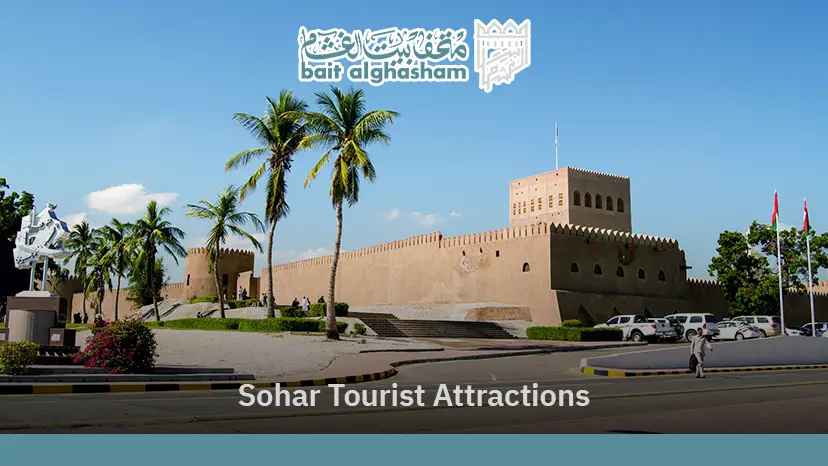
Sohar Fort is the city’s defining historical landmark. The snow-white fortress stands near the coast in Al Qal’ah and is generally dated to around the thirteenth or fourteenth century. Its five defensive towers recall periods of Portuguese, Persian and Omani control, while its position reflects Sohar’s former importance as a port and regional stronghold.Because good planning starts with knowing your options, everything you need is in a dedicated guide — Places to Visit in Muscat.
Inside, the museum introduces maritime navigation, trade links with China and India, copper mining and smelting, traditional weapons and underground defensive passages. Its setting connects the old town, fortifications and shoreline. Check current museum access before setting out, especially on weekends and public holidays.Because good planning starts with knowing your options, everything you need is in a dedicated guide — Archaeological Tourism in Oman.
Sohar Historical Souq and Handicrafts Souq
The Historical Sohar Souq stands near the Corniche on the site of an older trading market. Its Omani and Islamic design frames shops selling perfumes, frankincense, local remedies and traditional clothing. Merchants from India, China and East Africa once passed through Sohar’s wider port network.
The separate Sohar Handicrafts Souq supports artisans and traditional crafts. Its earth-toned design and Barasti-inspired details evoke older Gulf markets. Look for pottery, palm-leaf products, baskets, textiles, Arabian oud, frankincense and silverwork, including decorative khanjars. Ask before photographing shopkeepers or craftspeople.
Sultan Qaboos Grand Mosque
The Sultan Qaboos Grand Mosque in As Soyahrah is one of Sohar’s most impressive contemporary buildings. Its turquoise dome, marble surfaces, Persian carpet, carved wood and gypsum details, Arabic calligraphy and geometric patterns provide a strong contrast to the fort’s defensive architecture. Peaceful gardens add to the setting.
Non-Muslim visitor access, permitted times and any temporary restrictions should be confirmed locally. Dress conservatively: arms and ankles should be covered, clothing should be loose, and women should bring a head covering. Keep voices low and avoid visiting during prayer if public sightseeing access is restricted.
Sohar Gate
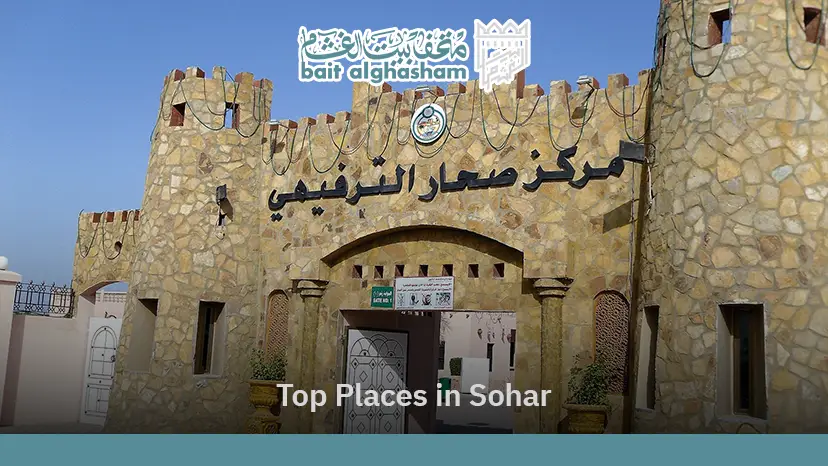
Sohar Gate is a modern, fortress-like monument on a principal approach to the city. Rather than an ancient fortification, it is an architectural tribute to Omani defensive design and a symbolic welcome to the northern governorates. It is particularly photogenic when illuminated after dark and works best as a brief roadside stop rather than a major visit.
Sohar Coast: Corniche, Beaches and Fishing Heritage
Sohar Beach Corniche
The Corniche is the easiest place to experience Sohar’s everyday coastal life. Clean paved walkways, landscaped sections, seating, play areas and a broad sea view make it suitable for walking, jogging and sunset photography. Cafes, seafood restaurants, food trucks and local carts become part of the evening atmosphere. Try mishakik—meat or chicken skewers grilled over charcoal with Omani spices—or pause for karak tea.
The beach and promenade are lively enough for families but still offer space to watch fishing boats and feel the sea breeze. It is a natural final stop after the fort and nearby souqs because the central attractions can be combined without a long transfer.
Sallan, Al Hambar and Majees Beaches
Choose Sallan Beach for a quieter shoreline and glimpses of local fishing life. Visitors may see fishermen handling nets or bringing in the day’s catch. Its calmer character suits an early walk, a gentle exercise session or unhurried time by the water.
Al Hambar Beach has a wide, open shore and unobstructed sunset views. In cooler late afternoons, residents use the sand for football and volleyball, making it a good choice for active travellers and photographers. Majees Beach is another spacious local option for a peaceful walk and views of small boats. Light water activities may be available at some beaches, but equipment, permissions, sea conditions and safety arrangements should always be checked on the day.
Al Sanger Beach Park and Almenyal Beach Park
Al Sanger combines a landscaped coastal park with sandy beach access. Its shaded seating, parking, barbecue spaces and children’s play areas make it one of the most practical family destinations in Sohar. The setting is generally quieter by day and more sociable on weekend evenings. Facilities and activities such as camel rides can vary, so treat them as possible additions rather than guaranteed services.
Almenyal Beach Park, outside the busiest central area, offers a more organised and relaxed stretch of golden sand. Seating shelters, restrooms and rinse-water facilities have been associated with the park, but visitors should confirm what is operational when they arrive. At every beach, assess currents and current swimming guidance rather than assuming calm-looking water is automatically safe.
Sohar Fishing Port and Fish Market
The fishing port and nearby Sohar Fish Market provide a direct look at the city’s relationship with the sea. Boats return with fresh catch, traders prepare seafood and market activity shows a working side of Sohar beyond its monuments. Market activity is typically strongest earlier in the day, but exact auction and public-access times can change. Ask locally before planning a dedicated visit, respect work areas and request permission before photographing fishermen or vendors.
Book your tour on WhatsApp — +968 9383 8979
Replies within 24–48 hours · Heritage tours from 3 OMR per person
Parks, Family Attractions and Modern Sohar
Silver Jubilee Park and Sohar Park
Silver Jubilee Park is among the city’s best-known family spaces, with broad lawns, walking paths, shaded trees, flower beds, play areas and a lagoon. Boating may be available, depending on current operations. Depending on the day or season, families may also find inflatable games, horse riding or other children’s entertainment. These should not be treated as permanent attractions. The park is well suited to a picnic, an evening stroll or a shaded pause between sightseeing stops.
Sohar Park offers another green place to rest when the coast feels busy. Either park can provide a midday break, although Sohar’s warmest months are better handled by shifting outdoor activity to early morning or evening.
Entertainment, Shopping and Cultural Events
Safeer Mall, China Mall Sohar, City Centre Sohar and Sohar Centre offer air-conditioned restaurants, arcades, children’s amusement areas, shops and cinemas during hot or humid periods.
The Sohar Entertainment Center has hosted heritage programming, including a model Heritage Village representing marine, agricultural and Bedouin environments, folk dances and regional chants. The annual Sohar Festival has also brought together artisans, poets, musicians, local food, historical photography and cultural talks. Dates, venue, programme and public access vary from year to year, so check official local announcements instead of planning around an assumed schedule.
A camel racing track on the outskirts reflects another side of Omani cultural heritage. Races and Ardah camel displays are occasional events, not daily shows. Attend only when a confirmed public event is scheduled and follow local guidance around animals and working areas.
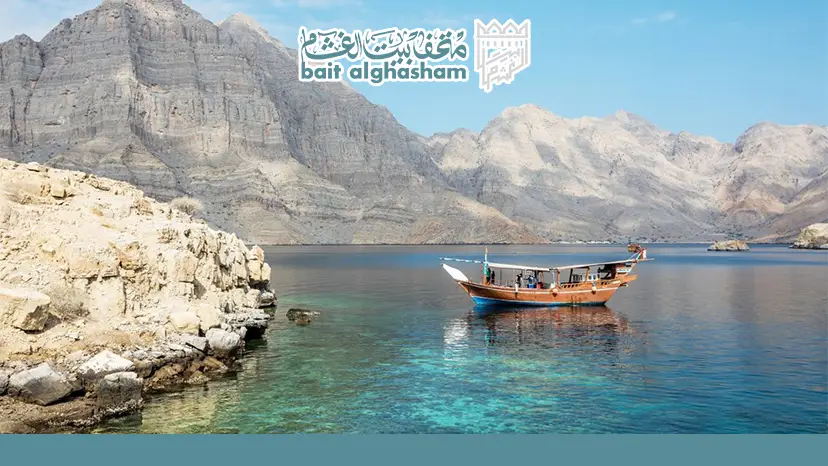
Mountain and Heritage Day Trips from Sohar
Wadi Jizzi
West of Sohar, Wadi Jizzi cuts into the Hajar Mountains and connects the modern city to an ancient copper landscape sometimes associated with Majan. Archaeological traces in the wider valley include old mining and smelting remains, slag heaps and tombs, while palm groves and oasis settlements soften the rugged scenery. It is also an off-road route in places. Do not remove archaeological material, enter unmarked mines or drive into remote sections without suitable navigation and local advice.
Wadi Hibi and Wadi Hibi Fort
Wadi Hibi, roughly 60–65 kilometres from central Sohar depending on the selected route, offers mountain villages, date palms, abandoned clay houses and traditional aflaj—gravity-fed channels that continue the long Omani practice of carrying water to farms. Wadi Hibi Fort is a modest nineteenth-century mud-brick structure in a rural setting rather than a heavily commercialised monument. Access and road conditions should be checked before departure.
Ain Sahban
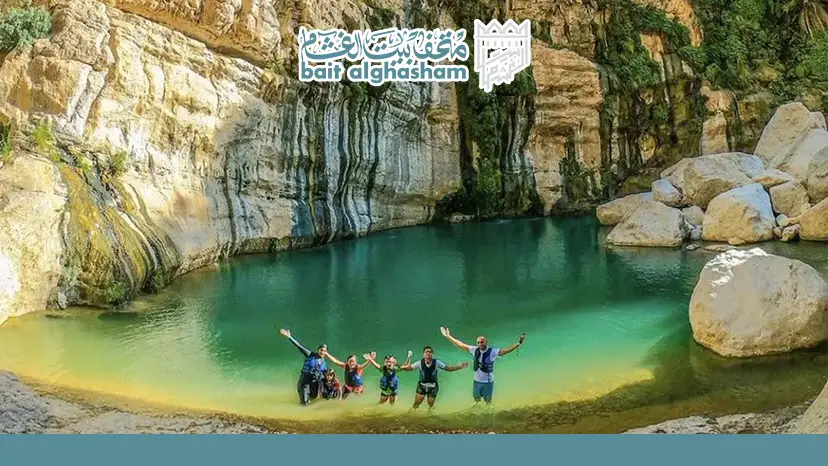
Ain Sahban is known for milky-blue sulfur-rich water set against dark mountain rock, a striking scene for geology and landscape enthusiasts. Reaching the spring involves rugged terrain, so use a suitable four-wheel-drive vehicle and seek current route guidance. Do not rely on unverified therapeutic claims, and check whether bathing is permitted and safe. Avoid remote wadi travel when rain is forecast because conditions can change quickly.
Liwa Fort
North of Sohar, Liwa Fort sits within a landscape of date palms and traditional settlements. Its Islamic defensive architecture and green surroundings make it appealing for photography and a short heritage detour. Confirm current access before travelling; exterior viewing may be the only option at some times.
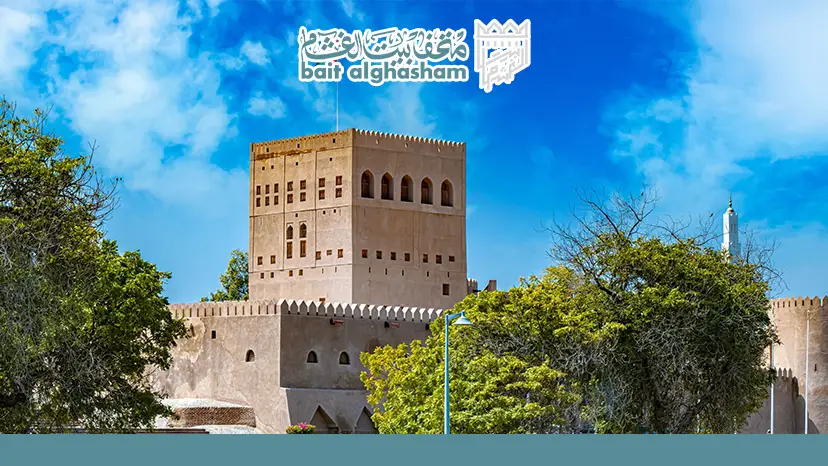
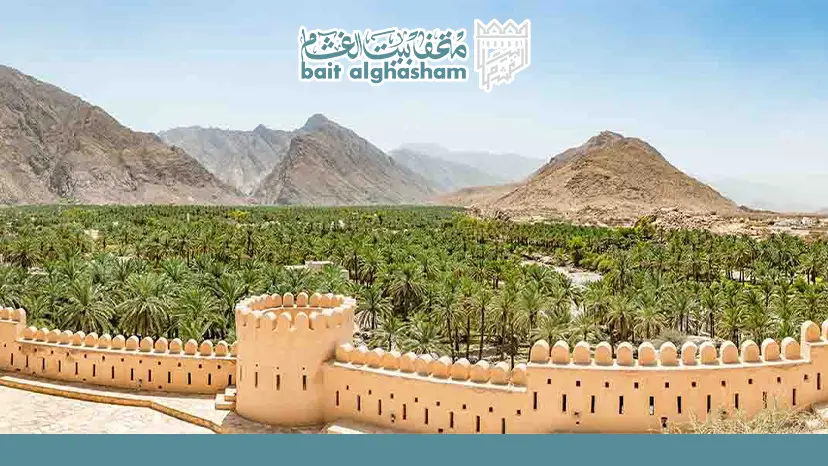
Travellers extending their cultural route elsewhere in Oman can also consider Bait Al Ghasham Museum, a restored nineteenth-century mud-brick house presenting historic domestic architecture and Omani life. Treat it as a separate onward journey, not a Sohar city attraction, and confirm arrangements directly.
Half-Day and Full-Day Sohar Plans
Half-Day City Highlights
Begin at Sohar Fort and Museum, allowing enough time for the exhibits rather than photographing only the exterior. Continue to the Historical Souq or Handicrafts Souq for frankincense, pottery, palm crafts and silverwork. If visitor access is confirmed and your clothing is appropriate, add the Sultan Qaboos Grand Mosque. Finish with a Corniche walk, seafood or mishakik and a view of the Gulf of Oman. Reverse the route if museum or mosque access makes that more practical.
Full-Day City and Coast Plan
Start with the fish market and port if current local information confirms worthwhile morning activity. Move on to Sohar Fort, then visit the Grand Mosque subject to access rules. Break for lunch and browse one or both souqs. During the hottest part of the day, rest at your hotel or use a mall rather than forcing an outdoor schedule. Later, choose Silver Jubilee Park or Al Sanger Beach Park for family time, then end at the Corniche or Al Hambar Beach for sunset and dinner.
For a second day, choose one focused excursion: Wadi Jizzi for copper heritage, Wadi Hibi for villages and aflaj, Ain Sahban for geology, or Liwa Fort for a shorter northern heritage trip. Do not try to combine every mountain site in one rushed drive.
Practical Sohar Travel Tips
October to April usually provides the most comfortable conditions for beaches, forts and walking, with November to March generally cooler. Summer can be very hot and humid, so prioritise museums, malls, hotels and other indoor spaces during the day, then move outside later. Festival dates and seasonal activities must be checked for the year of travel.
A standard car is adequate for central landmarks, parks and urban beaches. A four-wheel-drive vehicle is the safer choice for Ain Sahban and rough sections of Wadi Hibi or Wadi Jizzi. Public transport does not conveniently link every attraction, so a rental car or arranged driver is usually the most practical option. Carry water even in cooler weather, use sun protection, and keep cash for markets and small food sellers.
Dress modestly in public spaces, covering shoulders and knees; mosque standards are stricter. Ask before photographing people. Some traditional businesses pause during the hottest part of the afternoon, so confirm access rather than relying on fixed hours. Accommodation ranges from beach properties such as Radisson Blu Hotel Sohar and Sohar Beach Hotel to city hotels including Mercure Sohar and Royal Gardens Hotel. Compare current location, facilities and rates directly before booking.
Frequently Asked Questions About Places to Visit in Sohar
Is Sohar worth visiting?
Yes. Sohar offers maritime history, traditional markets, family parks and uncrowded coastal scenery in a calmer setting than Oman’s largest cities. It works especially well for travellers exploring North Al Batinah by road.
What are the best places to visit in Sohar for a first trip?
Prioritise Sohar Fort and Museum, the Sultan Qaboos Grand Mosque, the Historical or Handicrafts Souq and Sohar Beach Corniche. Families can add Silver Jubilee Park or Al Sanger Beach Park.
Can I visit Sohar in one day?
Yes. A full day covers the main city attractions and a sunset by the coast. Stay two or three days if you also want a mountain excursion, several beaches or a slower family schedule.
Which Sohar beach is best?
The Corniche is best for facilities, food and atmosphere. Sallan and Majees suit quieter walks, Al Hambar is attractive at sunset, and Al Sanger is practical for a family outing.
What is Sohar famous for?
Sohar is famous for its history as a maritime and copper-trading centre, its white fort, fishing culture and its legendary association with Sinbad the Sailor. Today it is also known for beaches, parks and industry.
Do I need a four-wheel-drive vehicle?
Not for the city, Corniche or main parks. Use a suitable four-wheel-drive vehicle for rugged routes towards Ain Sahban and remote sections of the mountain wadis, and obtain current route advice.
When is the best time to visit Sohar?
The cooler period from October to April is generally best for outdoor sightseeing. November to March is particularly comfortable, while summer itineraries should emphasise indoor stops and cooler parts of the day.
Your Next Step Starts Here
Pick your priorities from this guide, book what needs advance reservation, and leave room to wander. Your heritage trip starts with one message.