
Perched dramatically on the coastal cliffs of eastern Oman, The Ancient City of Qalhat and Bibi Maryam’s Tomb stand as evocative silent witnesses to a once-glorious maritime empire. Situated just north of Sur along the Gulf of Oman, this atmospheric archaeological site offers travelers an unforgettable journey back to the medieval Middle Ages, when Qalhat served as the primary ocean gateway for the Kingdom of Hormuz. Recognized globally for its exceptional historical integrity, the ruined city provides a rare window into the ancient Indian Ocean trade routes that linked Arabia, Persia, India, and China for centuries.
Why Was The Ancient City of Qalhat and Bibi Maryam’s Tomb UNESCO-Listed in 2018?
In recognition of its outstanding universal value and profound contribution to human maritime history, the site officially achieved its prestigious UNESCO listing 2018 status under the title “The Ancient City of Qalhat.” This inscription brought global attention to a rare archaeological treasure that encapsulates centuries of cross-cultural interaction and maritime dominance along the Arabian Peninsula.
- Exceptional Archaeological Integrity: Unlike many historic Indian Ocean ports that were swallowed by modern urbanization, Qalhat was largely abandoned in the early 16th century following political shifts and natural disasters. Because it was never rebuilt or heavily inhabited afterward, its complete medieval city layout—including domestic quarters, commercial markets, defensive fortifications, and civic infrastructure—remains virtually undisturbed beneath the earth, offering an intact time capsule for historians.
- Unique Cultural & Architectural Interchange: The surviving urban plan, defensive walls, water storage cisterns, and monumental cemetery grounds demonstrate a sophisticated blend of traditional Omani engineering and international artistic influences. As a key province of the Kingdom of Hormuz, Qalhat integrated Persian tile craftsmanship, Islamic architectural geometry, and specialized maritime masonry suited to withstand harsh coastal salt air.
- Intact Testimonial to Medieval Indian Ocean Trade: The UNESCO designation highlights Qalhat as an unrivaled physical testament to the maritime trade networks that operated across the Indian Ocean from the 11th to the 16th centuries. The city served as a primary gateway where Arabian, Persian, Indian, African, and Chinese influences intersected, facilitating not only the exchange of valuable goods like frankincense, Arabian horses, and Chinese porcelain, but also ideas, religions, and diplomatic traditions.
- Unrivaled Natural & Fortified Position: UNESCO also emphasized the site’s unique geographical context. Nestled between steep coastal mountains and high sea cliffs, Qalhat was engineered as an impregnable natural fortress, featuring double-walled defensive perimeters that protected both its wealthy merchant population and its sheltered inner anchorage.
Qalhat as a Thriving Medieval Trading Port
Long before modern ports reshaped the Gulf, The Ancient City of Qalhat and Bibi Maryam’s Tomb stood at the center of Qalhat’s ancient trading port, operating as one of the world’s most dynamic commercial crossroads. Occupying a strategic natural harbor protected by mountains and ocean cliffs, the city controlled the flow of high-value commodities between East and West.
- Global Trade Hub: Merchant ships anchored in Qalhat’s bay to export fine Omani Arabian horses, dates, and frankincense while importing Chinese porcelain, Indian spices, Persian ceramics, and African timber.
- Famous Historical Accounts: Celebrated travelers documented the city’s wealth at its peak. Ibn Battuta’s account of Qalhat in the 14th century vividly praised the city’s grand bazaars, exquisite congregational mosque, and thriving cosmopolitan harbor. Earlier, Marco Polo also noted Qalhat as a key maritime sanctuary for merchant dhows.
- The 16th-Century Decline: A catastrophic earthquake in the late 15th century, followed by the arrival and military sacking of the Portuguese fleet under Afonso de Albuquerque in 1508, eventually led to the abandonment of this once-bustling metropolis.
As a cornerstone of archaeological tourism in Oman, the coastal ruins of Qalhat offer history enthusiasts an exceptional opportunity to uncover medieval trading networks and ancient Islamic architecture.
Bibi Maryam’s Mausoleum and Its Historical Significance
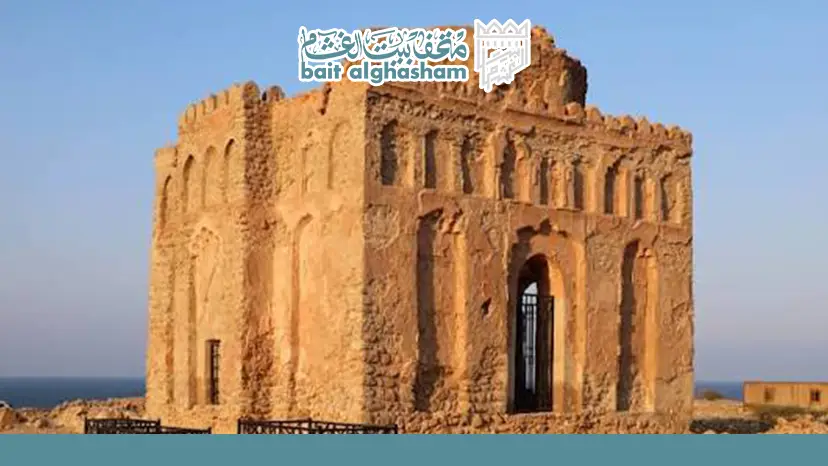
Surviving among the scattered stone foundations of the ruined city stands the site’s most iconic landmark: Bibi Maryam’s mausoleum.
- Architectural Masterpiece: This impressive coral-stone and mortar dome structure served as a monumental tomb or commemorative shrine. Its interior walls feature refined plasterwork motifs, pointed arch niches, and underground crypt vaults typical of medieval Persian craftsmanship.
- The Mystery of Bibi Maryam: Local tradition holds that the mausoleum was built by or dedicated to Bahauddin Ayaz, the governor of Hormuz, and his wife Bibi Maryam (Lady Maryam), who ruled the city during its golden age in the late 13th century.
- Visual Symbol: Standing proudly on the cliff overlooking the turquoise waters, the distinctive silhouette of Bibi Maryam’s mausoleum remains the primary visible structure above ground and the defining image of Qalhat’s enduring legacy.
How to Reach the Site From Sur?
Visiting The Ancient City of Qalhat and Bibi Maryam’s Tomb makes for an ideal cultural detour during a coastal road trip through the Sharqiyah region:
- Location: The site is located approximately 25 kilometers north of Sur (about a 20-minute drive) along the scenic Route 17 coastal highway connecting Muscat and Sur.
- Driving Directions: Heading north from Sur toward Tiwi and Wadi Shab, clear brown heritage signs mark the turn-off toward Qalhat. The site is situated right along the coastal cliffs overlooking the main road.
- Site Access & Visitor Tips: Because ongoing archaeological excavations and conservation projects are conducted by Oman’s Ministry of Heritage and Tourism, visitor access directly around the mausoleum may vary. Visitors are advised to stop at designated viewing areas or check with local tourism centers in Sur prior to arrival.
If you are planning to explore the Sultanate’s historic ports, ancient ruins, and mountain valleys with expert local guidance, booking tailored Oman tours ensures a seamless and enriching travel experience.
The Role of Water Management in Medieval Qalhat
Despite its arid coastal setting, ancient Qalhat developed advanced engineering solutions to sustain a dense population and accommodate visiting merchant fleets:
- Subterranean Aqueducts (Aflaj): Mountain runoff was channeled from nearby wadis into the city through underground canals, providing a steady supply of fresh water.
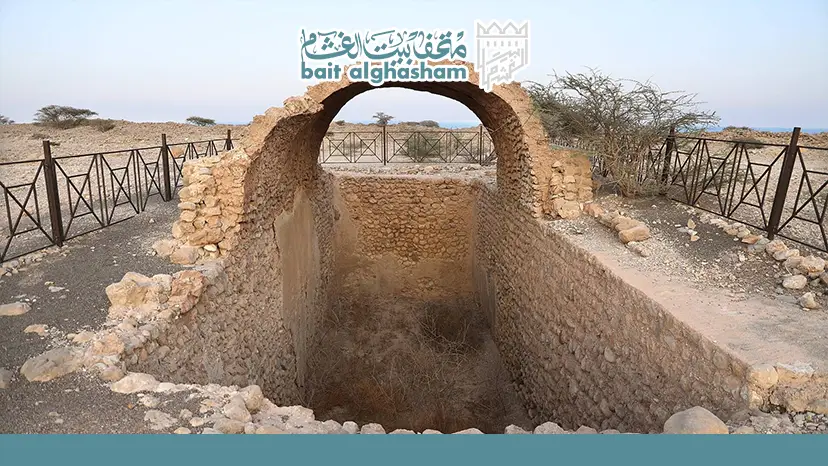
- Massive Cisterns & Reservoirs: Deep stone-lined water storage tanks were strategically constructed throughout the urban grid to store water during dry seasons and resupply long-distance trading dhows.
- Maritime Resource Adaptations: The city also utilized well-built wells along the coastal perimeter to ensure fresh water access for harbor workers and livestock exports.
Qalhat stands proudly alongside other world-famous UNESCO Sites in Oman, serving as a preserved physical testament to centuries of international maritime commerce across the Indian Ocean.
Portuguese Invasions and the Fall of Qalhat
The dramatic decline of Qalhat illustrates the shifting geopolitical powers across the Indian Ocean in the early 16th century:
- Arrival of Afonso de Albuquerque: In 1508, the Portuguese fleet targeted Qalhat during their campaign to dominate the strategic trade routes of the Arabian Sea and the Strait of Hormuz.
- Naval Siege & Destruction: After local governors resisted Portuguese demands, the city suffered severe naval bombardment, leading to the burning of its grand mosque, port facilities, and merchant warehouses.
- Shift of Trade Routes: The destruction of Qalhat’s harbor facilities, coupled with the growth of nearby Sur and Muscat under Portuguese rule, led to the gradual abandonment of the ancient city.
Archaeological Conservation and Future Tourist Facilities
Preserving the delicate ruins of Qalhat remains a top priority for Oman’s Ministry of Heritage and Tourism:
- Ongoing Conservation Efforts: Specialized international teams work to stabilize the coral-stone walls of Bibi Maryam’s mausoleum and protect underground crypts from coastal erosion.
- Visitor Center & Interpretive Trails: Plans for the site include eco-friendly walking paths, elevated viewing platforms, and an educational visitor center detailing Qalhat’s history without impacting the unexcavated ruins.
- Sustainable Heritage Tourism: Oman’s UNESCO management strategy balances public access with strict protection measures to ensure the historical site remains intact for future generations.
Explore Sur’s Maritime Coast:
After visiting Qalhat, head just 20 minutes south to the historic city of Sur. Beyond its famous dhow shipyards, make sure to visit the iconic Al Ayjah Lighthouse in Sur for sweeping views of the lagoon and traditional coastal architecture.
Frequently Asked Questions About The Ancient City of Qalhat and Bibi Maryam’s Tomb
Why was Qalhat UNESCO-listed?
Qalhat was UNESCO-listed in 2018 because it offers an exceptionally preserved physical record of medieval Indian Ocean trade. Unlike many ancient trade ports that were built over by modern development, Qalhat was abandoned in the 16th century and never rebuilt. This left its complete medieval city layout, defensive fortifications, underground water systems, and monumental tombs virtually intact beneath the ground as a unique time capsule of 11th- to 16th-century Arabian maritime commerce.
Who was Bibi Maryam?
Bibi Maryam (Lady Maryam) was a prominent historical ruler of Qalhat during its golden age in the late 13th and early 14th centuries. She governed the city alongside or following her husband, Bahauddin Ayaz, the governor under the Kingdom of Hormuz. Renowned for her leadership, civic contributions, and piety, local tradition credits her with building the grand congregational mosque and commissioning the iconic coral-stone mausoleum that bears her name today.
How far is Qalhat from Sur?
Qalhat is located approximately 25 kilometers north of Sur, taking roughly 20 minutes by car along the coastal Route 17 highway toward Muscat. Its proximity makes it a convenient detour when traveling between Sur, Wadi Shab, and Tiwi.
Why is Qalhat historically famous?
Qalhat was a major medieval trade harbor controlled by the Kingdom of Hormuz, famous for its global maritime commerce in frankincense, Arabian horses, and Chinese porcelain, as recorded by Ibn Battuta and Marco Polo.
Is Bibi Maryam’s Tomb open to the public?
While the site can be viewed from adjacent access roads and panoramic viewpoints, direct entrance inside the mausoleum structure is periodically restricted to protect and restore the delicate medieval plasterwork.
How far is Qalhat from Muscat?
Qalhat is located roughly 180 kilometers southeast of Muscat, which takes approximately 1 hour and 45 minutes by car via the Route 17 coastal highway.
What other attractions are near Qalhat?
Qalhat is situated near major natural attractions, including Wadi Shab (15 km north), Wadi Tiwi, and the maritime city of Sur with its historic dhow shipyards.