
The Arabian Oryx Sanctuary Oman holds a uniquely complex place in global conservation history. Spanning vast gravel plains and dunes in central Oman, this natural haven was established to protect the iconic Arabian Oryx (Oryx leucoryx)—a species deeply rooted in Bedouin culture and Arabian heritage. Once inscribed on the World Heritage List as a triumph of wildlife conservation, the site achieved global notoriety in 2007 when it became the first property ever to be delisted by UNESCO, marking a pivotal turning point for world environmental policy.
Where Is the Arabian Oryx Sanctuary Oman Located?
The sanctuary is situated in the remote, hyper-arid central desert within the Al Wusta Governorate, encompassing a vast gravel desert plateau known as Jiddat al-Harasis.
- Geographic Isolation: Covering thousands of square kilometers of gravel plains, coastal fog zones, and rolling sand dunes, the sanctuary’s unique climate relies on seasonal coastal fogs that nourish rare desert flora.
- The Jaaluni Headquarters: At the heart of the sanctuary lies Jaaluni, the primary ranger headquarters, breeding facility, and scientific research center where early captive-bred oryx were first reintroduced into the wild.
- Diverse Ecosystem: Far from being an empty void, this unique environment supports a surprising variety of desert wildlife, including gazelles, Nubian ibex, caracals, desert foxes, and numerous migratory bird species suited to extreme climates.
The Story of Saving the Arabian Oryx From Extinction
The journey of saving the oryx from extinction is one of the most remarkable rescue operations in modern conservation history.
- Near-Total Extinction: By 1972, relentless poaching and motorized hunting drove the wild Arabian Oryx to complete extinction in the wild across the Arabian Peninsula.
- Operation Oryx: In a critical global effort, a small captive herd known as the “World Herd” was established in the United States using a few captured wild specimens.
- Return to Oman: In 1982, under the directive of Sultan Qaboos bin Said, captive-bred oryx were triumphantly returned to their native habitat at the Arabian Oryx Sanctuary Oman, successfully establishing the first free-ranging wild population in modern history.
For wildlife enthusiasts seeking protected coastal ecosystems, a trip to [Al Saleel Nature Reserve](%20https://baitalghasham.com/en/blog/al-saleel-nature-reserve/) in Sharqiyah offers sanctuary to Omani gazelles and rare acacia woodlands.
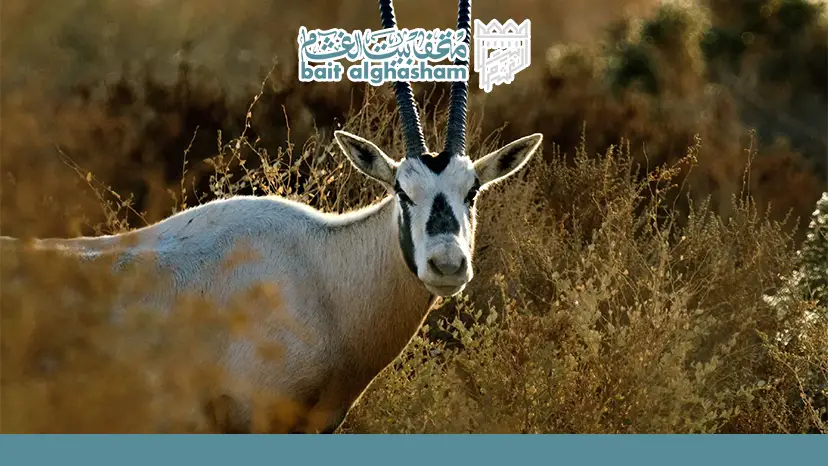
Key Characteristics and Adaptation Skills of the Arabian Oryx
The Arabian Oryx (Oryx leucoryx) is a masterpiece of evolutionary adaptation, perfectly engineered to survive the hyper-arid climate of Oman’s central desert:
- Water Conservation Mastery: The oryx can go weeks without drinking free-flowing water. Instead, it absorbs essential moisture from dew-soaked desert plants and morning coastal fogs that roll across the Jiddat al-Harasis plain.
- Thermal Regulation: Its striking white coat reflects the blazing desert sunlight, while dark leg markings absorb heat during chilly winter nights. Underneath its skin, a specialized network of blood vessels cools blood heading to the brain.
- Specialized Hooves: Their wide, shovel-like hooves act as natural snowshoes for the sand, allowing them to traverse soft dunes and rugged gravel plains with ease in search of grazing vegetation.
Why Was It Delisted From UNESCO in 2007?
In 1994, the sanctuary was inscribed as a UNESCO World Heritage Site in recognition of its outstanding natural value and conservation success. However, subsequent management decisions led to an unprecedented diplomatic outcome:
- Unilateral Boundary Reduction: In 2007, the Omani government decided to reduce the sanctuary’s protected area by 90% to open the region for oil and gas prospecting.
- Resurgence of Poaching: Concurrent with boundary changes, renewed poaching pressures drastically reduced the wild oryx population from nearly 450 individuals to fewer than 50 breeding pairs.
- The UNESCO Verdict: Concluding that the reduction in site area and decline of the species degraded the site’s “Outstanding Universal Value,” the UNESCO World Heritage Committee officially delisted the sanctuary in 2007—making it the first property in history to be stripped of its status.
How Oman Restored Its Wild Population After 2007
Following the 2007 UNESCO delisting, the Sultanate of Oman renewed its commitment to protecting its national symbol, transforming loss into a successful conservation story:
- Establishment of the Al Wusta Wildlife Reserve: Rebranded and placed under strict government oversight via the Environment Authority, the sanctuary received enhanced legal protection and focused conservation budgets.
- Advanced Anti-Poaching Tech: Traditional ranger patrols were bolstered by satellite GPS tracking collars, drone surveillance, and computerized monitoring to eliminate poaching risks across the vast gravel plains.
- Breeding Success: Modern veterinary facilities and expanded breeding enclosures at Jaaluni have successfully boosted wild and semi-wild herds back into healthy, stable numbers.
Visit Dhofar’s Mountain Wilderness:
Travel south to Dhofar to experience the dramatic cliffs of Jabal Samhan Reserve, one of the last wild refuges for the critically endangered Arabian leopard.
Flora and Fauna: What Else Lives in Jiddat al-Harasis?
Beyond its iconic namesake, the Arabian Oryx Sanctuary Oman protects a surprisingly rich desert ecosystem nourished by seasonal moisture from the Arabian Sea:
- Rare Desert Flora: The plateau supports hardy drought-resistant flora, such as Acacia tortilis trees and endemic dwarf shrubs that provide food and crucial shade for wildlife during peak summer temperatures.
- Diverse Mammals: The sanctuary serves as a stronghold for Arabian Gazelles (Gazella gazella), Sand Gazelles (Gazella subgutturosa), Nubian Ibex, Caracals, and the elusive Arabian Wildcat.
- Avian Lifeline: During spring and autumn migration seasons, the reserve’s coastal fog belt creates a vital oasis for over 150 species of migratory birds, including houbara bustards, eagles, and falcons.
Can Visitors See the Oryx at the Arabian Oryx Sanctuary Oman Today?
Despite losing its UNESCO title, the Omani government rebranded the sanctuary as the Al Wusta Wildlife Reserve, launching stricter protection protocols that restored the wild herds.
- Visitor Access: Travelers interested in wildlife conservation can visit the captive breeding enclosures and interpretive center at Jaaluni with advance permits issued by the Environment Authority of Oman.
- Safari Encounters: Guided ranger tours offer visitors a rare opportunity to spot wild oryx roaming the open gravel plains, particularly during the cooler morning hours when animals graze on fog-moistened vegetation.
- Planning Your Trip: Visiting the reserve requires a 4×4 vehicle, adequate supplies, and an official entry permit due to its remote location in the central desert.
From desert wildlife sanctuaries and wadi trekking to coastal fortresses, discovering the best things to do in Oman helps travelers build an unforgettable itinerary across the country’s diverse regions.
Discover More Nature and Wildlife Across Oman
Complete your Omani expedition by exploring the historical landmarks of South Al Batinah and taking time to Discover Bait Al Ghasham a restored 200-year-old mud-brick mansion that gives travelers an intimate look into traditional Omani architecture and royal history.
Frequently Asked Questions About Arabian Oryx Sanctuary Oman
Why was the Oryx Sanctuary removed from the UNESCO list?
The sanctuary was delisted in 2007 after the Omani government reduced its protected area by 90% for oil and gas prospecting. This massive boundary reduction, combined with a sharp decline in the wild oryx population caused by renewed poaching, destroyed the site’s “Outstanding Universal Value,” making it the first property in history to be stripped of its UNESCO World Heritage status.
Where is the sanctuary located?
The sanctuary is located on the vast gravel plains of Jiddat al-Harasis within the Al Wusta Governorate in central Oman. It sits roughly midway between Muscat and Salalah, with its main ranger headquarters and breeding center stationed at Jaaluni.
Can visitors see the Arabian oryx today?
Yes, visitors can see the Arabian oryx today. Now managed as the Al Wusta Wildlife Reserve, the sanctuary allows travelers to view herds at the Jaaluni breeding center and observe wild oryx on guided ranger tours across the desert. An official permit from the Environment Authority of Oman and a 4×4 vehicle are required to enter.
Why was the Arabian Oryx Sanctuary removed from the UNESCO list?
It was delisted in 2007 after the sanctuary’s protected boundary was unilaterally reduced by 90% for energy development, accompanied by a sharp decline in the wild oryx population due to poaching.
Where is the Arabian Oryx Sanctuary located in Oman?
The sanctuary is located on the Jiddat al-Harasis plateau within the Al Wusta Governorate in central Oman, roughly midway between Muscat and Salalah.
Is the Arabian Oryx still endangered?
Thanks to intensive reintroduction and breeding programs across Oman, Saudi Arabia, and the UAE, the species’ threat status was successfully downgraded from “Critically Endangered” to “Vulnerable” by the IUCN.
Do I need a permit to visit the Al Wusta Wildlife Reserve?
Yes, visitors must obtain an official permit from the Environment Authority of Oman prior to visiting the reserve and ranger center at Jaaluni.