
Rising majestically above the capital skyline, the Sultan Qaboos Grand Mosque Muscat stands as an architectural triumph and the spiritual heart of the Sultanate of Oman. Functioning as Oman’s largest mosque, this magnificent complex seamlessly blends traditional Islamic artistry—from Persian and Anatolian influences to distinct Omani motifs—with modern engineering. Whether you are admiring its towering minarets from afar or exploring its serene marble courtyards, a visit to this grand landmark is essential for understanding Oman’s rich cultural and religious heritage.
The Mosque’s Construction History and Size
Commissioned by His Majesty Sultan Qaboos bin Said in 1992 to mark his 25th year of reign, the complex underwent six years of meticulous craftsmanship before its official inauguration in 2001.
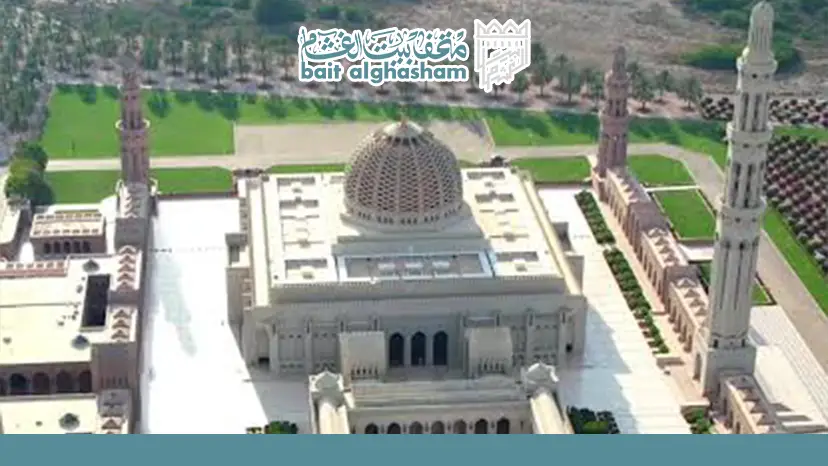
- Massive Footprint: Built from 300,000 tonnes of Indian sandstone, the entire mosque site spans an astounding 416,000 square meters, featuring vast outer courtyards, landscaped gardens, and quiet arcades (riwaqs).
- Imposing Capacity: The main prayer hall alone accommodates up to 6,500 worshippers, while the entire complex, including the outer paved courtyards and women’s prayer hall, can hold over 20,000 worshippers simultaneously.
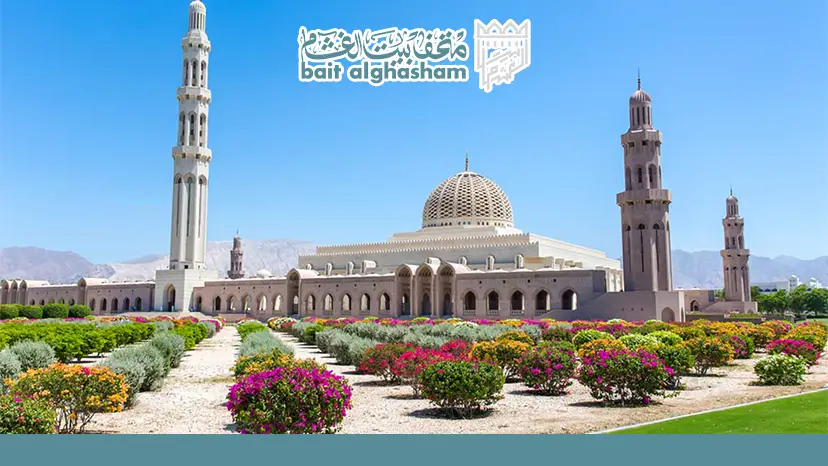
- Towering Minarets: The skyline is defined by five distinct minarets representing the five pillars of Islam, with the central main minaret reaching a height of 90 meters.
The Chandelier and Carpet That Were World Records at Opening
Stepping inside the main prayer hall reveals interior craftsmanship of extraordinary detail, highlighted by two world-famous artistic achievements that held global records upon the mosque’s opening:
- The Hand-Woven Persian Carpet: Covering the floor of the main hall is a single, continuous hand-woven Persian carpet measuring 4,340 square meters. Crafted by 600 female weavers from Khorasan over four years, it contains 1.7 billion individual knots, weighs 21 tonnes, and features 28 distinct natural dye shades.
- The Massive Crystal Chandelier: Suspended from the central dome 50 meters above the floor hangs a breathtaking Swarovski crystal chandelier. Manufactured by Faustig in Germany, this masterpiece spans 14 meters in height, weighs 8.5 tonnes, and holds 1,122 bulbs along with 24-karat gold-plated trim.
Visiting Hours and Rules for Non-Muslim Visitors
The Sultan Qaboos Grand Mosque Muscat is one of the few active places of worship in the Gulf region open to non-Muslim travelers, offering a unique opportunity for cultural exchange.
- Visiting Hours for Non-Muslim Visitors: Non-Muslim guests are welcome to visit Saturday through Thursday between 8:30 AM and 11:00 AM. The mosque is strictly closed to non-Muslim visitors on Fridays and during prayer times.
- Admission and Entry: Entry to the mosque complex, prayer halls, and surrounding gardens is completely free of charge.
- Guided Information: Visitors can access the Islamic Cultural Center located within the complex to learn about Islamic architecture, request free informational booklets, or speak with resident guides.
Unlock Muscat’s Cultural Treasures:
Immerse yourself in the story of Oman without the stress of planning. Bait Al Ghasham Group provides expertly crafted itineraries covering Muscat’s finest heritage sites and natural wonders. Book your Oman tours today to begin your adventure!
Modest Dress Code Inside Sultan Qaboos Grand Mosque Muscat
Because the mosque is a sacred site of daily worship, adhering strictly to the Omani dress code is required for entry into the grounds and prayer halls:
- Attire for Women: Women must wear loose-fitting, non-transparent clothing that fully covers their arms to the wrists and legs to the ankles. A headscarf (hijab) must be worn to completely cover the hair and neck prior to entering.
- Attire for Men: Men must wear long trousers/pants and shirts that cover the shoulders (long sleeves are preferred). Shorts, tank tops, and sleeveless shirts are strictly prohibited.
- General Rules: Shoes must be removed before entering the carpeted prayer halls and placed on designated wooden racks. Keep voices low, set mobile phones to silent, and refrain from eating or drinking inside the halls.
Architectural Highlights and Islamic Artistry
The design of the Sultan Qaboos Grand Mosque Muscat is a masterpiece of Islamic geometry, structural balance, and fine traditional craftsmanship:
- Premium Natural Materials: The entire sanctuary is built using 300,000 tonnes of Indian sandstone, paired with polished Italian Carrara marble floors across the wide outdoor courtyards.
- Intricate Calligraphy & Tilework: The interior walls feature hand-carved Quranic verses in classical Arabic script, alongside colorful ceramic zellige tile panels that mirror the historic artistry found in local landmarks like Old Mutrah Souq and Persian and Andalusian artistic traditions.
- The Serene Arcades (Riwaqs): Surrounding the outer courtyards are vaulted walkways decorated with distinct architectural motifs from various Islamic eras, offering cool shaded paths and picturesque framing for photography.
Facilities and Amenities for Visitors
Designed as an inclusive center for learning and community, the mosque offers modern facilities to ensure a comfortable visit:
- Islamic Cultural Center & Library: Located within the grounds, the library houses over 20,000 books covering Islamic history, philosophy, and science, open to researchers and curious guests.
- Attire Rental Service: A dedicated visitor center near the main entrance provides rental options for traditional abayas and headscarves if your clothing does not meet the mandatory dress code.
- Accessibility & Comfort: The flat marble pathways, spacious walkways, and shaded seating areas make the entire complex easily accessible for elderly visitors and wheelchair users.
Best Photography Spots and Visiting Tips
Capturing the grandeur of Oman’s iconic landmark requires a bit of planning to make the most of your time:
- Arrive Early at Opening: Plan your arrival for 8:30 AM when the gates open for non-Muslim visitors. This allows you to explore the main prayer hall and capture clear photos before tourist tour buses arrive.
- Central Courtyard Frame: Stand in the main outer marble courtyard to frame the grand central dome and the 90-meter main minaret against the bright Omani sky.
- Interior Lighting: Use the natural sunlight filtering through the stained glass windows to highlight the intricate detail of the Persian carpet and the glowing Swarovski crystal chandelier.
Complete your cultural adventure with Bait Al Ghasham Group by traveling to Wadi Al Maawil in South Al Batinah to Discover Bait Al Ghasham—a 200-year-old architectural masterpiece that brings traditional Omani living, royal heritage, and historic craftsmanship to life!
Frequently Asked Questions About Sultan Qaboos Grand Mosque Muscat
What are the visiting hours for non-Muslims?
Non-Muslim visitors are welcome to visit the mosque from Saturday through Thursday, between 8:30 AM and 11:00 AM. The mosque is strictly closed to non-Muslim tourists on Fridays and during daily Islamic prayer times.
Is a specific dress code required?
Yes, a strict modest dress code is required for all visitors entering the complex:
- Women: Must cover their full body down to the wrists and ankles in loose, non-transparent clothing. Hair and neck must be fully covered with a headscarf (hijab).
- Men: Must wear long trousers/pants and shirts that cover the shoulders (long sleeves are preferred). Shorts, tank tops, and sleeveless shirts are strictly prohibited.
- Shoes: Must be removed before stepping onto the carpeted prayer halls.
How long does a visit take?
A typical visit takes approximately 1 to 1.5 hours. This provides ample time to explore the main prayer hall, view the large crystal chandelier and Persian carpet, stroll through the outer marble courtyards, and visit the Islamic Cultural Center.
Is there an entry fee for the Sultan Qaboos Grand Mosque?
No, entrance to the mosque grounds, main prayer halls, and surrounding gardens is free of charge for all visitors.
What happens if I do not have the proper clothing when I arrive?
Abayas for women and suitable long garments for men can be rented or purchased for a small fee at the visitor center near the main entrance.
Can I take photographs inside the main prayer hall?
Yes, non-commercial photography and video recording are permitted inside both prayer halls and outer courtyards during official visiting hours, provided you do not disturb other guests.
Explore More Iconic Landmarks Across the Capital:
From the glowing marble courtyards of the Grand Mosque to historic seaside fortresses and vibrant traditional souks, Oman’s capital is packed with cultural treasures. Make sure to explore top places to visit in Muscat to build a complete itinerary covering the very best of the city’s heritage, coastlines, and architectural gems!