
Historical places in Oman — this guide gathers everything you need before planning your visit: top places, best seasons, and short practical tips.
Oman’s historical places tell a story that is much older and broader than its famous forts. Across the country, Bronze Age tombs rise from stony plains, gravity-fed water channels sustain oasis settlements, fortified ports recall Indian Ocean trade, and mud-brick castles reveal how people governed, studied, stored food and defended their communities. Traditional souqs, maritime towns and restored houses add the human scale: history here is found not only in monuments, but also in crafts, irrigation, seafaring and patterns of daily life.
The most rewarding way to explore this heritage is to combine periods and places. A route through Al Dakhiliyah can pair prehistoric remains with Islamic forts and living oasis towns. Muscat and the Batinah coast explain maritime defence and overseas exchange. Al Sharqiyah connects dhow-building Sur with the medieval port of Qalhat, while Dhofar follows frankincense from desert oasis to coastal harbour. This guide organizes the principal historical and archaeological sites in Oman by period, region and type, then provides practical advice for planning a respectful visit.
Why Oman Has Such a Rich Historical Landscape
Oman occupies a strategic corner of the Arabian Peninsula, facing sea routes that connected Arabia with India, East Africa and the wider Indian Ocean. Copper, frankincense, dates and maritime trade supported contact across long distances. Inland, the Al Hajar Mountains, desert corridors and fertile oases shaped where communities settled and how they protected water, farms and markets.Because good planning starts with knowing your options, everything you need is in a dedicated guide — Oman forts we operate.
That geography produced several distinctive forms of heritage:Because good planning starts with knowing your options, everything you need is in a dedicated guide — Museums in Oman.
- Archaeological landscapes preserve tombs, settlements, workshops and ports from prehistoric and early historic periods.
- Forts, castles and watchtowers guarded towns, mountain passes, harbours, wells and cultivated land.
- Aflaj irrigation systems distributed water by gravity and supported organized agricultural communities.
- Historic towns and souqs remain places of trade, craftsmanship and social life rather than isolated monuments.
- Museums and traditional houses interpret domestic life, political history, seafaring, food storage and regional dress.
Materials also reveal adaptation to climate and local resources. Builders used stone, mud brick, timber and sarooj, a traditional water-resistant mortar. Thick walls moderated heat, while courtyards, openings and ventilation helped move air. In fortified residences, wells, storerooms and date-processing areas could support households during periods of insecurity. Painted ceilings, carved doors, plaster inscriptions and geometric decoration show that defensive architecture could also be residential, educational and artistic.
Oman’s History by Period and Site Type
Bronze Age tombs and early settlements
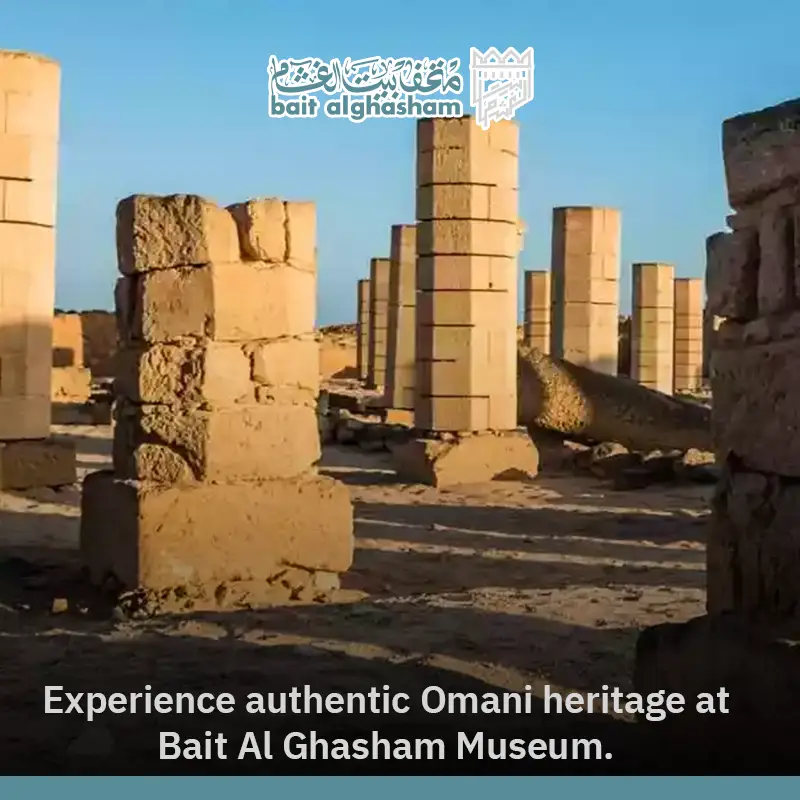
Some of the oldest visible historical places in Oman belong to the third millennium BCE. The UNESCO-listed Archaeological Sites of Bat, Al-Khutm and Al-Ayn in Al Dhahirah contain settlements, monumental towers, necropolises and distinctive stone tombs often described as “beehive” tombs. Their scale suggests organized communities with the labour and technical knowledge to construct durable ceremonial landscapes.
These sites are especially valuable because they place Oman within wider Bronze Age exchange networks. They should be approached as archaeological landscapes rather than polished attractions: remains can be dispersed, surfaces are uneven, and shade and visitor facilities may be limited. Nothing should be climbed, moved or collected.
Salut, in the interior, adds evidence from later prehistoric and early historic phases. Its fortifications, settlement remains and surrounding archaeological features help explain the development of oasis communities and strategic control in central Oman. Together, Bat and Salut show that the country’s history did not begin with its early modern forts; those monuments stand at the end of a much longer story of settlement, water management and regional exchange.
Ancient water engineering and oasis life
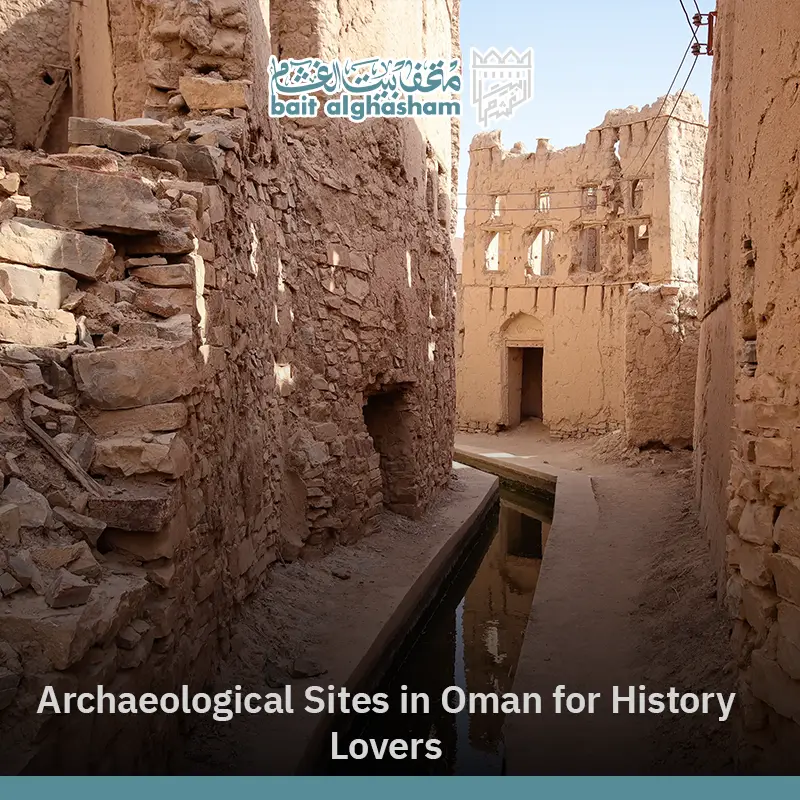
Oman’s aflaj are not simply channels. They are complete social and agricultural systems that carry water from underground sources, springs or wadis to farms and settlements, with established rules governing distribution. Five systems represent the UNESCO World Heritage property known as the Aflaj Irrigation Systems of Oman. The wider tradition extends across numerous communities and remains part of living heritage.
An aflaj visit is most meaningful when paired with an oasis town. Look for the relationship among the water channel, date palms, fields, mosque, houses, souq and fort. This arrangement explains why fortifications frequently stood beside cultivated land: their purpose included protecting water and food security as well as political authority. Visitors should keep channels clean, avoid blocking the flow and respect private farms and residential paths.
Medieval ports and the frankincense network
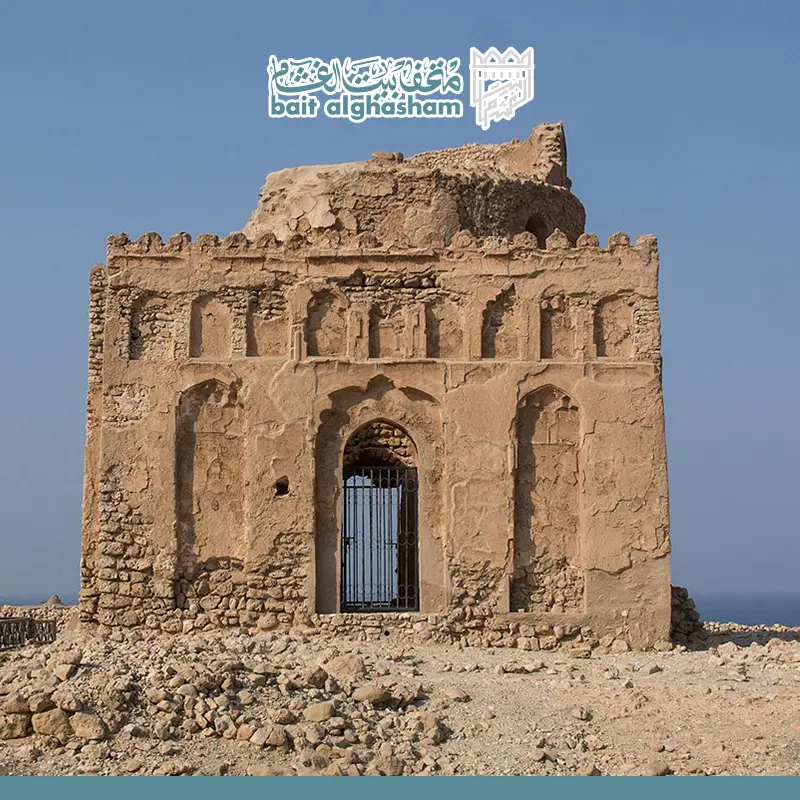
By the medieval period, Omani ports were central to maritime exchange. The Ancient City of Qalhat, on the coast of Al Sharqiyah, was an important stop in Indian Ocean trade and was recorded by travellers including Ibn Battuta. Its archaeological remains, including the Bibi Maryam mausoleum, evoke a cosmopolitan port linked to Arabia, Persia, India and East Africa.
Farther south, the UNESCO-listed Land of Frankincense brings together different stages of an ancient commercial network. Wadi Dawkah represents the source landscape of frankincense trees. Shisr, associated with the oasis settlement often linked to Ubar traditions, recalls desert caravan movement. Sumhuram at Khor Rori was a fortified port, while Al Baleed developed into a major coastal city and trading centre. Visiting more than one component reveals the full route from tree and caravan oasis to harbour and overseas market.
Islamic forts, castles and fortified residences
Oman’s forts vary greatly in date and function. Some occupy ancient foundations and were expanded repeatedly; others were designed as palaces, centres of learning, government seats or fortified family residences. Their wells, storerooms, passages, prayer areas and reception rooms make them records of social organization as much as military structures.
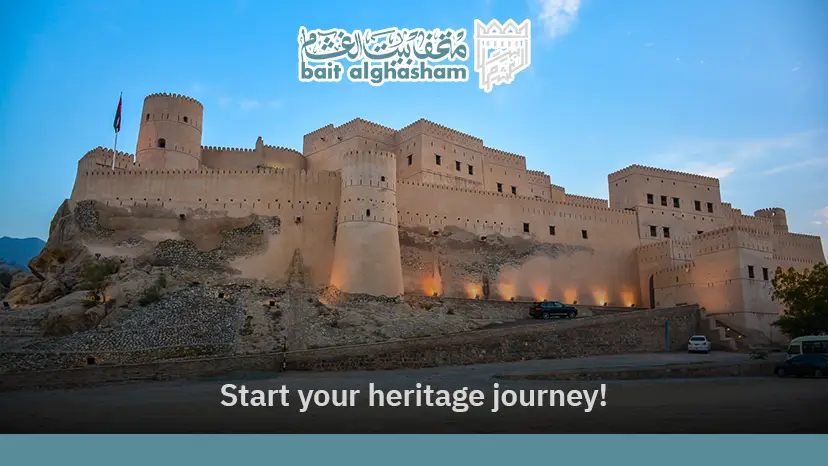
Bahla Fort, a UNESCO World Heritage Site in Al Dakhiliyah, is a monumental earthen complex associated especially with the Banu Nebhan period. Its relationship with the old settlement, oasis and long defensive wall makes Bahla more than a single building.
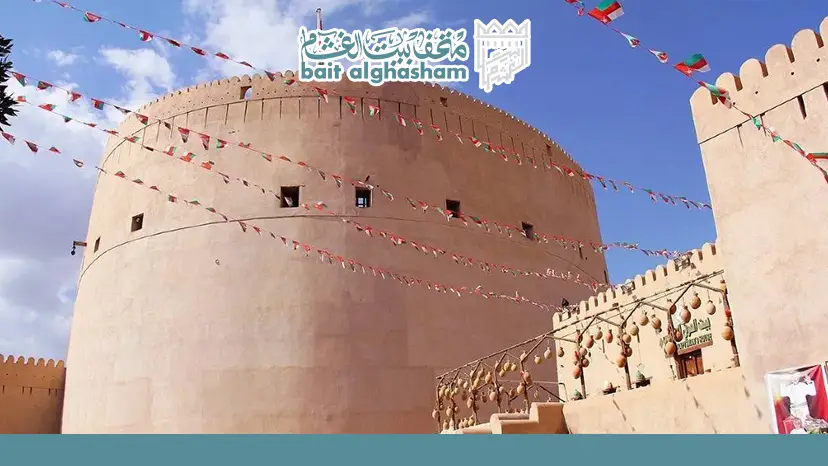
Nizwa Fort is renowned for its massive circular tower. The complex illustrates defensive planning through controlled entrances, elevated firing positions, wells and storage areas, while its location beside Nizwa Souq connects authority with commerce and oasis life.
Jabrin Castle—also commonly written Jabreen—shows the refined residential and educational side of seventeenth-century architecture. Painted wooden ceilings, inscriptions, carved doors and carefully arranged rooms distinguish it from a purely military fort.
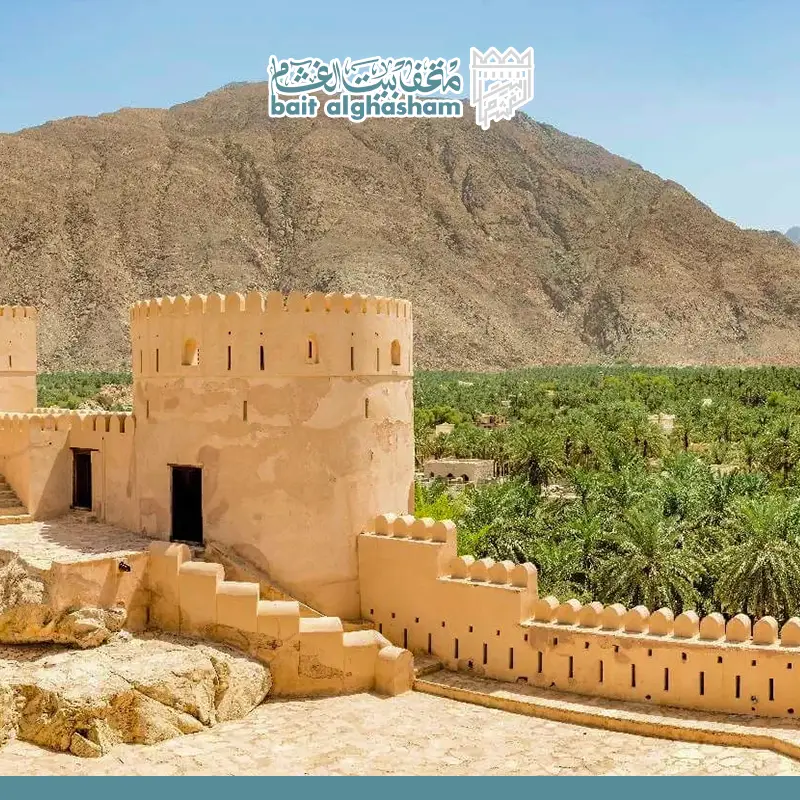
Nakhal Fort, Rustaq Fort and Al Hazm Castle form a strong heritage circuit in South Al Batinah. Nakhal rises from a natural rock outcrop above palms. Rustaq’s long development reflects successive periods of regional importance. Al Hazm is notable for massive masonry, stone arches, corridors, gates and integrated defensive design.
Smaller sites deepen the picture. Al Mansur Fortress near Rustaq represents a fortified rural residence with residential rooms, storage, towers, water access and features connected with food preservation. Bait Al Ghasham in Wadi Al Maawil presents the domestic and social dimensions of a historic fortified house through courtyards, majlis spaces, family rooms and traditional architectural details.
Book your tour on WhatsApp — +968 9383 8979
Replies within 24–48 hours · Heritage tours from 3 OMR per person
Historical Places in Oman by Region
Muscat: old harbour, gates and souq
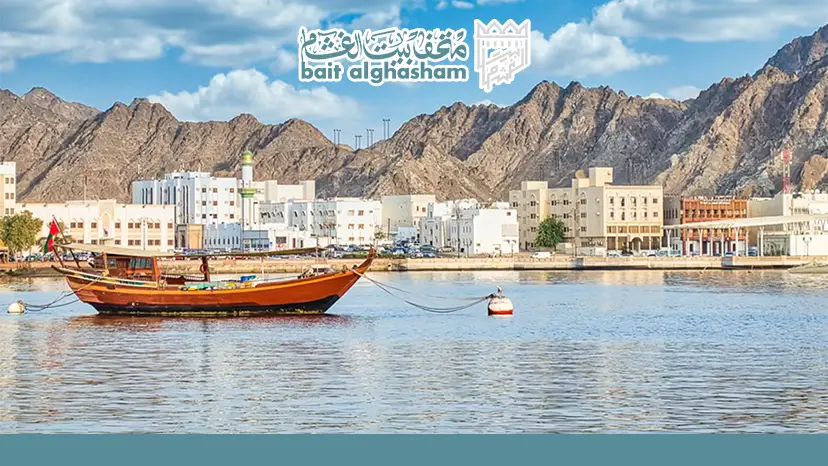
Begin in Old Muscat, where Al Jalali and Al Mirani forts frame the historic harbour. Their position demonstrates the strategic value of controlling access from the sea. Access to individual official or military sites can be restricted, but the surrounding cityscape still gives a clear sense of Muscat’s coastal defences. Nearby, the ceremonial Al Alam Palace area, old walls and gates help visitors read the capital’s urban history.
The Muscat Gate Museum provides useful context on the city’s development, architecture and water systems when open. Continue to Muttrah, whose corniche and souq reflect the commercial life of a port city. Frankincense, silverwork, textiles and spices connect present-day shopping with older exchange networks. Because Muttrah remains a working neighbourhood and market, considerate photography and respect for traders matter.
Al Dakhiliyah: forts, oases and mountain settlements
Al Dakhiliyah offers the most concentrated first journey through inland heritage. Nizwa Fort and Souq can anchor the route. The Friday livestock market is an active local event rather than a staged performance, so visitors should observe without obstructing buyers, sellers or animals.
Bahla lies within easy reach and combines its UNESCO fort with an old oasis settlement and pottery tradition. Jabrin Castle adds ornate interiors and a palace-like atmosphere. Samail Fort, overlooking a historic valley route between the coast and interior, illustrates how elevated positions protected movement, settlements and storage.
Traditional villages broaden the itinerary beyond major monuments. Al Hamra and nearby mountain communities preserve lanes, mud-brick houses, date gardens and aflaj. Some structures are fragile or privately used. Follow signed routes, avoid entering closed buildings and ask before photographing residents.
Al Batinah: coastal strongholds and the Rustaq–Nakhal circuit
North and South Al Batinah contain forts that protected both maritime and agricultural centres. Sohar Fort, with its prominent white exterior, is connected to Sohar’s long commercial history. Museum displays within the complex have interpreted archaeology, copper production and trade with India, China and East Africa.
Farther south, Barka Fort represents a coastal stronghold with defensive, residential and administrative spaces. Inland, Nakhal, Rustaq and Al Hazm can be combined over one or two days. This circuit reveals how forts were positioned near palms, water sources and routes through the mountains. Bait Al Ghasham and Al Mansur Fortress can add the perspective of residential heritage, subject to their current opening arrangements.
Al Sharqiyah: Sur, Qalhat and fortified routes
Sur is one of Oman’s defining maritime towns. Traditional dhow-building, the Al Ayjah district and coastal watchtowers recall a seafaring economy linked to East Africa and India. Sunaysilah Fort, on elevated ground, watched approaches to the settlement and routes connected with Sur’s trade.
The Ancient City of Qalhat is the region’s principal archaeological destination. Treat it as a protected ruin, not an adventure playground: remain within permitted areas and do not touch masonry. Ibra’s old quarters and Al Minzifah add merchant houses and mud-brick settlement architecture to an eastern itinerary, although access and conservation conditions can vary.
Al Dhahirah: Bronze Age monuments and inland forts
Al Dhahirah is essential for archaeology-focused travellers. Bat, Al-Khutm and Al-Ayn reward patient exploration, especially with a knowledgeable guide who can distinguish tomb forms, towers and settlement areas. The sites are spread across open terrain, so navigation and weather preparation are important.
Ibri and its surrounding routes also contain later forts, including Al Aswad Fort, whose elevated towers reflect control over valleys and inland movement. Combining prehistoric remains with Islamic fortifications demonstrates how strategic landscapes were reused across millennia.
Dhofar: frankincense landscapes and southern architecture
Dhofar offers a distinct historical environment. Al Baleed Archaeological Park beside Salalah combines excavated urban remains with the Museum of the Frankincense Land, whose galleries explain maritime history and the incense trade. Sumhuram at Khor Rori preserves a fortified port in a dramatic lagoon setting. Shisr introduces the inland caravan stage, while Wadi Dawkah connects the story to living frankincense trees.
Regional forts and houses reveal southern building traditions. Taqah Castle interprets a nineteenth-century administrative residence through domestic rooms, tools, clothing and defensive features. Mirbat Fort and the old port area connect frankincense, seafaring, horses and local military history. During the khareef season, mist and greenery transform the landscape, but rain, crowds and slippery ground may affect travel.
Museums and Living Heritage
Museums can turn architectural details into understandable stories. The Museum of the Frankincense Land at Al Baleed links archaeology with trade and navigation. Displays at Sohar Fort explain the city’s maritime and copper connections, while Taqah Castle’s furnished rooms illuminate southern domestic life. Muscat Gate Museum introduces the capital before a walk through Old Muscat. Historic-house museums such as Bait Al Ghasham focus on the majlis, courtyards, family spaces, materials and household practices often overshadowed by military narratives.
Living heritage is equally important. Nizwa’s souq, Bahla’s pottery, Sur’s dhow craftsmanship and aflaj-supported date gardens are not museum props. They involve working communities. Buy crafts thoughtfully, ask before photographing people, and avoid treating private homes, farms or workshops as unrestricted attractions.
How to Plan a Historical Route in Oman
Choose a realistic regional itinerary
Driving distances can be substantial, so group sites geographically. A first-time seven-day heritage route might allocate two days to Muscat and the Batinah coast, two or three days to Nizwa, Bahla, Jabrin and nearby villages, and two days to Sur and Qalhat. Dhofar usually works better as a separate trip or with a domestic flight. Archaeology enthusiasts may add Bat and Ibri, while travellers interested in forts can devote more time to the Rustaq–Nakhal–Al Hazm circuit.
A standard car is generally adequate for major cities and well-known forts reached by paved roads. A four-wheel-drive vehicle may be necessary for remote desert, mountain or rough-track sites, but it is not automatically required for every heritage journey. Do not enter wadis during rain, attempt restricted tracks or rely solely on mobile coverage. Download offline maps and carry water.
Check access rather than assuming
Opening hours, ticket prices, restoration closures and photography rules can change. Friday schedules may be shorter, and museums can observe different hours during Ramadan, public holidays or summer. Verify official or locally published information shortly before departure. Remote archaeological landscapes may lack gates, ticket desks, toilets or shade; open access does not mean unrestricted movement.
Public forts, UNESCO properties and archaeological parks are protected heritage places administered by their relevant authorities. Museums and visitor services may have separate operators. This guide does not imply private ownership of any public monument, fort, archaeological site or UNESCO property.
Visit in the right season and time of day
October to April is usually the most comfortable period for outdoor heritage travel in northern and interior Oman. Summer temperatures inland can exceed 40°C, making early-morning visits essential. In Dhofar, khareef from roughly June to September brings cooler, misty conditions and high visitor numbers.
Start exposed archaeological sites early. Save shaded castle interiors or museums for warmer hours, while remembering that not every historic building is air-conditioned. Late afternoon can offer attractive light, but allow enough time to leave before a site closes or darkness makes uneven ground unsafe.
Pack for comfort and conservation
Wear modest, breathable clothing covering shoulders and knees, sturdy shoes for irregular steps, sun protection and a hat. Carry sufficient water, especially outside towns, plus a charged phone or power bank. A small flashlight can be useful only where permitted; never enter closed tunnels, roofs or unstable rooms.
Do not climb tombs, lean on mud-brick walls, carve names, remove pottery fragments or fly a drone without authorization. Keep food and litter away from archaeological remains and aflaj. Ask permission before photographing people, religious spaces, private residences or working craft areas. A licensed local guide can add context, translate inscriptions and point out features that are easy to miss while supporting the local visitor economy.
Frequently Asked Questions
What are the most famous historical places in Oman?
Frequently visited landmarks include Nizwa Fort and Souq, Bahla Fort, Jabrin Castle, Nakhal Fort, Rustaq Fort, Al Hazm Castle, Old Muscat, the Ancient City of Qalhat, Bat and Al-Ayn, and the Land of Frankincense sites in Dhofar. The best selection depends on whether you prefer archaeology, military architecture, maritime history or living heritage.
Which archaeological sites in Oman are UNESCO-listed?
Oman’s cultural World Heritage properties include Bahla Fort; the Archaeological Sites of Bat, Al-Khutm and Al-Ayn; the Land of Frankincense; the Aflaj Irrigation Systems of Oman; and the Ancient City of Qalhat. Each property has its own boundaries and access arrangements, so consult current visitor guidance.
What is the difference between a fort, a castle and an archaeological site?
In travel usage, a fort is mainly associated with defence and control, while a castle may combine defence with residence, administration or learning. Omani buildings often served several functions, so labels overlap. An archaeological site is a place studied through surviving structures, deposits and artefacts; it may include a settlement, tombs, port, fort or irrigation landscape.
Are historical places in Oman free to visit?
Some souqs, old quarters and open landscapes can be visited without an admission fee, while managed forts, museums and archaeological parks commonly charge for entry. Fees and access policies change, so check current information instead of relying on old price lists.
Do I need a guide?
A guide is not essential for every major fort or museum, but one is valuable at dispersed archaeological landscapes such as Bat or for a themed route focused on architecture, inscriptions, aflaj or frankincense. Guides can also help travellers distinguish public visitor areas from private or protected land.
What is the best time to visit Oman’s heritage sites?
For most outdoor sites in the north and interior, October to April offers milder weather. Visit early in the day at any time of year. Dhofar’s khareef is cooler and visually distinctive, although popular places can be busy and wet.
Can children visit forts and archaeological parks?
Many families visit successfully, but supervision is essential. Forts can contain steep stairs, low barriers and uneven floors, while open archaeological sites may have loose stones, heat exposure and limited facilities. Check accessibility and safety information for each destination.
Continue the Journey at Bait Al Ghasham
Oman’s public forts, archaeological parks and UNESCO sites belong within a national heritage landscape that deserves careful, respectful exploration. To complement those monumental places with the intimate story of an Omani household, visitors can include Bait Al Ghasham in Wadi Al Maawil. Its rooms, courtyards and majlis spaces offer a closer view of residential architecture and social life. Explore current visitor information and cultural experiences through the Bait Al Ghasham website.
Your Next Step Starts Here
Pick your priorities from this guide, book what needs advance reservation, and leave room to wander. Your heritage trip starts with one message.