
Located in the heart of the capital within the Ministry of Heritage and Tourism complex, the Natural History Museum Muscat offers a captivating journey through the Sultanate’s diverse ecosystems, prehistoric origins, and unique biodiversity. Opened in 1985, this educational landmark presents a comprehensive breakdown of Oman’s physical landscape from its rugged mountain ranges and vast desert dunes to its rich marine coastlines. Whether you are interested in ancient fossils, regional flora and fauna, or complex geological exhibits, the museum serves as a vital repository of the country’s natural heritage.
Highlight Exhibits: The Whale Skeleton and Omani Minerals
The museum’s collection covers millions of years of natural evolution across several specialized galleries:
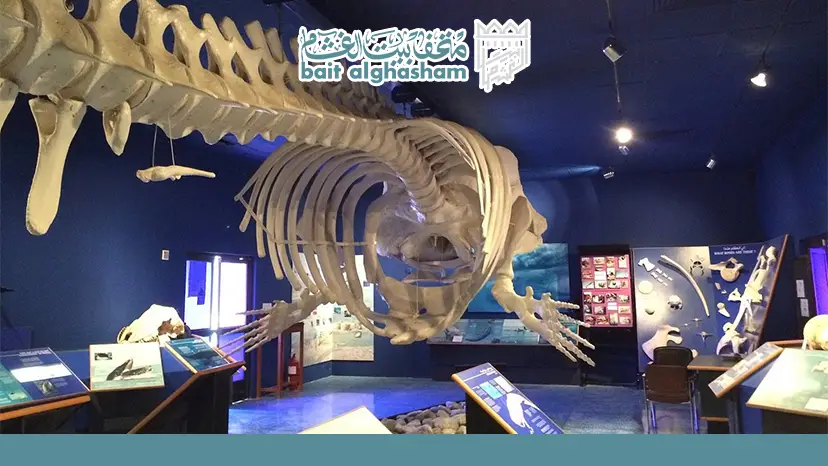
- The Whale Hall: The centerpiece of the museum is its iconic sperm whale skeleton, suspended dramatically within a dedicated exhibition hall. Beached along the Omani coast in the 1980s, this massive 14-meter specimen gives visitors an up-close look at the marine giants that inhabit the Arabian Sea.
- Geological Exhibits and Mineral Wealth: Oman boasts some of the world’s most unique geological formations. The museum displays rare rock samples, copper ores, semi-precious stones, and ancient marine fossils dating back over 260 million years when parts of Oman were covered by ancient oceans.
- Flora and Fauna Collections: Detailed taxidermy and botanical displays showcase indigenous species, including the Arabian leopard, caracal, mountain gazelle, and endangered Arabian oryx, along with native plant varieties tailored to arid landscapes.
Explore Historic Royal Residences:
Travelers fascinated by traditional Omani architecture can visit Bait Al Ghasham, a restored 200-year-old mud-brick royal mansion in South Al Batinah that highlights regional domestic life and craftsmanship.
Is the Natural History Museum Muscat Suitable for Children?
As a premier family-friendly museum, the facility is designed to engage visitors of all ages through clear visual displays and educational narratives:
- Interactive Visual Learning: High-contrast dioramas and realistic habitat recreations help children easily visualize how Oman’s wildlife adapts to harsh desert and mountain climates.
- Manageable Size: Unlike sprawling multi-story institutions, the museum features a concise, well-organized floor plan that can be fully explored in 1 to 2 hours without overwhelming young children.
- School and Youth Engagement: The museum frequently hosts educational groups, offering simple Arabic and English signage that makes complex concepts in geology and marine biology easy to digest.
Visiting Hours and Its Location in Central Muscat
Planning a trip to the museum is straightforward thanks to its central position in the capital:
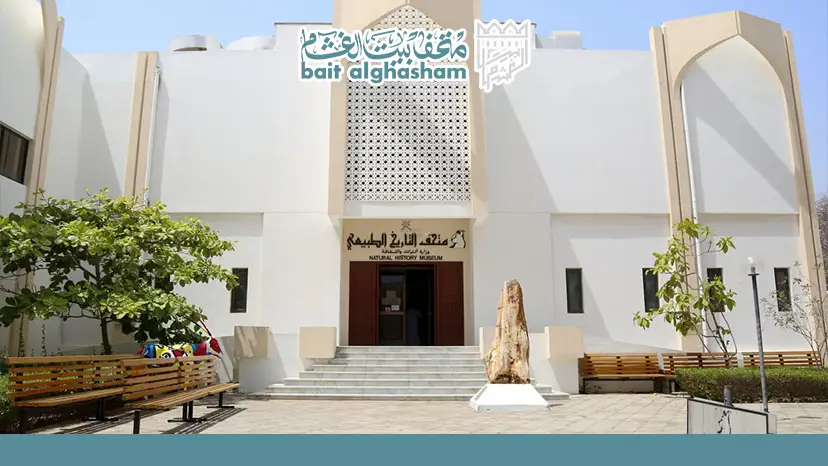
- Location: Situated in the Al Khuwair district along Sultan Qaboos Street, the museum resides inside the Ministry of Heritage and Tourism building, making it accessible via taxi or public bus routes.
- Operating Hours: Typically open from Saturday through Thursday (morning and afternoon sessions), while remaining closed on Fridays and public holidays. Visitors should verify seasonal adjustments prior to arrival.
- Entry Fees: Admission fees are modest, offering an affordable cultural activity for families, solo travelers, and student groups alike.
Discover Top Capital Highlights:
Plan your northern stopovers by checking out the most iconic places to visit in Muscat.
Combining the Visit With Al Alam Palace and the Two Forts
Due to its proximity to Al Alam Palace and Old Muscat (a short drive east along the coastal highway), visitors can easily integrate the museum into a broader full-day itinerary:
- Al Alam Palace: Experience the vibrant gold and blue ceremonial palace of His Majesty the Sultan, located in the heart of Old Muscat.
- Al Jalali and Al Mirani Forts: Marvel at the twin 16th-century Portuguese fortresses guarding the entrance to Muscat Harbor, offering dramatic views of the coastline.
- Muttrah Corniche and Souq: Conclude your day with a walk along the seaside promenade and explore traditional Omani handicrafts, spices, and silver at the famous Muttrah Souq.
Discover Traditional Omani Heritage:
If you are eager to explore traditional Omani culture and rural architecture beyond natural history, plan a trip to Bait Al Ghasham Museum, a beautifully restored 200-year-old mud-brick royal mansion in South Al Batinah showcasing authentic Omani domestic life.
The Origins of Oman’s Fossils and Prehistoric Treasures
Beyond modern wildlife, the Natural History Museum Muscat preserves evidence of Oman’s ancient geological shifts dating back hundreds of millions of years:
- Tree Fossils and Ancient Flora: Ancient petrified wood and plant impressions reveal an era when parts of the Omani landscape were covered by dense, humid rain forests.
- Extinct Marine Life: Marine fossil beds feature well-preserved sea urchins, teeth of prehistoric sharks, and shell formations retrieved from high mountain altitudes in the Al Hajar range, proving those peaks were once submerged underwater.
Educational Workshops and Scientific Research Efforts
The Natural History Museum Muscat serves not only as a public tourist attraction but also as a vital hub for scientific conservation, taxonomy, and ecological study across the Arabian Peninsula:
- Taxidermy and Specimen Preservation: Specialized laboratories within the museum complex house expansive scientific archives, including the National Herbarium and the National Shell Collection. Dedicated research scientists maintain meticulously cataloged botanical and zoological specimens, providing academic researchers and visiting biologists with vital data to study Arabian biodiversity and evolutionary history.
- Awareness Programs for Endangered Species: Interactive educational exhibits highlight ongoing conservation initiatives supported by the Sultanate. These programs focus on protecting vulnerable regional fauna—such as the critically endangered Arabian leopard, green sea turtles nesting along Ras Al Jinz, the Arabian oryx, and native coastal raptors—by educating school groups and the public on habitat preservation and marine ecology.
Visitor Amenities and Photography Guidelines
To ensure a comfortable and hassle-free visit to the Natural History Museum Muscat, keep these practical details and operational guidelines in mind:
- Photography Rules: Standard, non-commercial handheld photography and videography are permitted throughout all main exhibition galleries. Visitors are welcome to take personal souvenir photos of major displays like the sperm whale skeleton and raw mineral collections. However, flash photography and tripods may be restricted around delicate biological specimens and historic archival materials to protect them from light degradation.
- Accessibility and Climate Control: The entire museum complex features full central air conditioning, providing an ideal indoor educational refuge during warm summer afternoons in Muscat. The facility is designed for easy physical access, featuring smooth ground-floor layouts, entrance ramps, wide display corridors, and accessible restroom facilities suitable for wheelchair users and strollers.
- On-Site Facilities: Visitors can take advantage of shaded parking spaces within the Ministry complex, clear bilingual directional signage (Arabic and English), and quiet seating areas throughout the galleries for families with young children or seniors needing a rest break during their tour.
Frequently Asked Questions About Natural History Museum Muscat
Is the Natural History Museum suitable for children?
Yes, it is an ideal family-friendly museum for children. The facility features high-contrast dioramas, life-sized animal recreations, and a manageable single-floor layout that kids can comfortably explore in 1 to 2 hours without getting overwhelmed.
What are its highlight exhibits?
The museum’s centerpiece is the massive 14-meter sperm whale skeleton displayed in the dedicated Whale Hall. Other key highlights include detailed geological exhibits featuring 260-million-year-old fossils and rare Omani minerals, as well as taxidermy displays of rare indigenous wildlife like the Arabian leopard and Arabian oryx.
Where exactly is it located?
The museum is located in the central Al Khuwair district of Muscat, situated directly within the complex of the Ministry of Heritage and Tourism along Sultan Qaboos Street.