
Rising high above the surrounding valleys of northeastern Oman, Jabal Shams Oman (Mountain of the Sun) is the undisputed pinnacle of the Al Hajar Mountain range. Renowned as Oman’s highest peak, this majestic mountain attracts outdoor enthusiasts, hikers, and sightseers from across the globe. From sweeping panoramic views over deep limestone abysses to historic mountain villages and rugged hiking routes, visiting Jabal Shams is a highlight of any Arabian travel itinerary.
Where Jabal Shams Oman Is Located and How to Get There
Understanding the mountain’s geographical location and road conditions makes planning your visit straightforward:
- Geographic Position: Situated in the Ad Dakhiliyah Governorate, Jabal Shams lies approximately 240 kilometers southwest of Muscat and roughly 90 kilometers from the historic city of Nizwa.
- Driving Route: The drive from Muscat takes about 3 to 3.5 hours. Travel along Route 15 toward Nizwa, continue toward Al Hamra, and then follow the winding mountain ascent up the peak.
- Vehicle Requirements: A 4WD (four-wheel drive) vehicle is strongly recommended. While the initial climb features modern paved roads, the final stretch leading to the main canyon viewpoints and trailheads includes steep, unpaved gravel tracks.
Jabal Shams Oman Height and Why It’s Called Arabia’s Grand Canyon
Jabal Shams earns its legendary reputation through its sheer scale and breathtaking vertical drop:
- Peak Elevation: Soaring to approximately 3,009 meters above sea level, it stands proudly as Oman’s highest peak. Because its summit catches the very first rays of dawn, it earned the Arabic name Jabal Shams (“Mountain of the Sun”).
- Grand Canyon of Arabia: Carved directly beneath the main plateau lies Wadi Ghul, a dramatic gorge dropping vertically over 1,000 meters. This spectacular geological rift has earned the region international fame as the Grand Canyon of Arabia.
The Famous Balcony Walk Trail
For trekkers and adventure seekers, the rim of Wadi Ghul offers one of the most memorable hiking experiences in the Middle East:
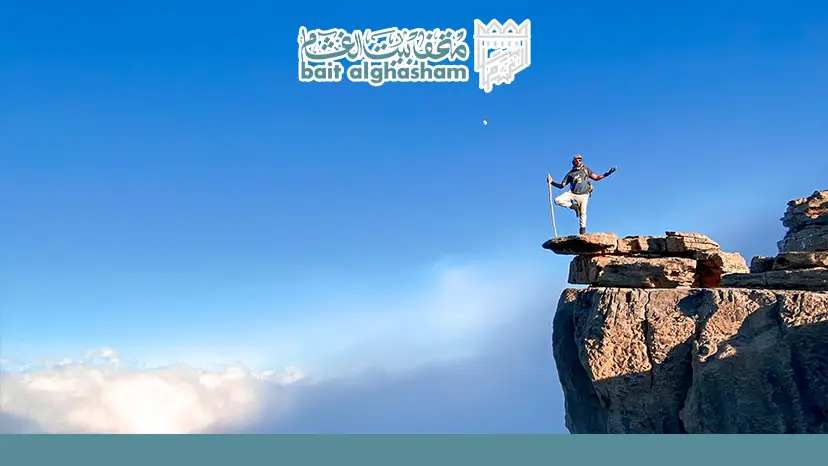
Hiking the rim along the Balcony Walk. Source: Oman Wanderlust
- The Route (W6 Trail): The famous Balcony Walk is a cliffside trail that skirts the vertical ledge of the canyon, offering continuous, jaw-dropping views into the gorge below.
- Exploring Sab Bani Khamis: The trail leads hikers to the abandoned stone settlement of Sab Bani Khamis, often referred to as the sinking village or hidden village, built directly into the overhanging cliff face alongside ancient terraced gardens and an abandoned pool.
- Trail Difficulty: This intermediate, 3-to-4-hour round-trip hike features a clear path marked with yellow, white, and red flags, though hikers should be comfortable with exposed height edges.
Best Time to Visit and Safety Tips
To make the most of your mountain journey, keep these seasonal and practical safety considerations in mind:
- Best Time to Visit: The ideal time for trekking and camping is between October and April, when daylight temperatures range from a comfortable 15°C to 25°C.
- Cool Mountain Climate: Due to the extreme altitude, temperatures at the top are significantly lower than in Muscat or Nizwa. During winter nights, temperatures can drop close to freezing, so warm jacket layers are essential.
- Safety and Hydration: Stay on marked paths, carry at least 2 to 3 liters of water per person, check weather forecasts to avoid sudden flash floods in surrounding wadis, and start hikes early in the morning.
Top Camping and Stargazing Spots on Jabal Shams
Thanks to its soaring elevation and minimal light pollution, the high plateau of Jabal Shams is one of Arabia’s premier destinations for outdoor overnight stays and night-sky observation:
- Plateau Rim Camping: Pitching a tent along the upper rim of Wadi Ghul offers incredible sunset vistas and breathtaking early-morning views over the vast canyon floor. Campers should choose flat, sheltered ground away from precipitous edges and ensure tents are firmly anchored with heavy rocks, as high mountain winds can sweep across the exposed summit during the night.
- Stargazing and Astrophotography: Perched far above urban smog and city lights, the crisp, thin air of the mountain reveals crystal-clear views of the night sky. On moonless nights, visitors can observe the radiant galactic core of the Milky Way, meteor showers, and distant constellations with the naked eye, making the plateau a world-class hub for night-sky photography and astronomy enthusiasts.
Nearby Attractions to Combine with Your Visit
Enhance your trip to Jabal Shams Oman by visiting iconic historical and natural sites situated along the mountain base and surrounding foothills:
- Al Hamra Old Town: Located at the foot of the mountain range, this 400-year-old ancient town is famous for its remarkably preserved multi-story mud-brick houses built in the traditional Yemeni architectural style. Visitors can wander through dense date palm oases, explore ancient alleyways, and visit living heritage museums like Bait Al Safah, where local artisans demonstrate traditional bread making, coffee roasting, and Omani oil extraction.
- Misfat Al Abriyeen: A picturesque mountain village perched on the steep slopes of Jabal Akhdar’s foothills, renowned for its ancient UNESCO-recognized falaj (falaj Al Khatmeen/Al Hamra system) gravity-fed irrigation channels. The village features lush terraced gardens growing mangoes, papayas, and pomegranates, along with restored clay mud-houses transformed into heritage guesthouses and cozy cliffside cafes overlooking the palm valley.
- Wadi Ghul Village: An ancient abandoned stone village located directly at the mouth of the gorge leading up to the canyon. Historically famous as a hub for Omani rug weaving and goat-hair textile crafts, the village offers a glimpse into traditional highland architecture, surrounded by dramatic rock formations and terraced fields at the canyon floor.
- Al Hoota Cave: Situated near the base of the mountain, this 2-million-year-old subterranean cave system stretches over 4.5 kilometers. Visitors can ride an electric train into the cave cavern to view stalactites, stalagmites, and a massive underground lake home to rare blind cave fish (Garra barreimiae).
Accommodation Options: Resorts vs. Wild Camping
Travelers to Jabal Shams Oman can choose between modern mountain hospitality and rugged wilderness camping, depending on their desired level of comfort and adventure:
- Mountain Resorts and Eco-Lodge Facilities: For visitors preferring comfort, several established resorts near the canyon rim offer private chalets, heated rooms, buffet dining, and guided trekking services.
- Wild Camping Facilities: Free wild camping is widely permitted across the plateau, provided campers bring their own firewood, heavy warm sleeping bags, and follow “Leave No Trace” principles.
- Governorates of Oman
- Wadi Shab Oman
- Arabian Oryx Sanctuary Oman
Frequently Asked Questions About Jabal Shams
Where exactly is Jabal Shams located?
Jabal Shams is located in the Ad Dakhiliyah Governorate of northeastern Oman. It forms part of the central Al Hajar Mountain range, situated approximately 240 kilometers southwest of Muscat and about 90 kilometers northwest of the historic city of Nizwa.
How high is Jabal Shams?
Jabal Shams stands at approximately 3,009 meters (9,872 feet) above sea level. It is the highest mountain peak in Oman and the entire Arabian Peninsula, earning it the title “Mountain of the Sun.”
What is the Balcony Walk trail?
The Balcony Walk (W6 Trail) is a famous cliffside hiking route along the rim of Wadi Ghul. The trail contours the edge of the canyon, offering spectacular views into the 1,000-meter drop below, and leads hikers to Sab Bani Khamis an abandoned stone village built directly into the overhanging cliff face.