
Al Alam Palace Muscat is one of the most recognizable and historic landmarks in the Sultanate of Oman. Serving as the ceremonial residence of His Majesty the Sultan, this magnificent venue is used primarily for official state functions, receiving foreign dignitaries, and hosting national celebrations. Framed by rugged volcanic mountains, manicured gardens, and historic coastal strongholds, the palace complex perfectly captures the balance between Omani tradition and modern Islamic design.
The Palace’s History and Its Official Role Today
Al Alam Palace Muscat which translates to “The Palace of the Flag” has a royal history spanning over two centuries. The original palace on this site was built in the early 19th century by Sultan bin Ahmed.
- Modern Rebuilding: In 1972, under the reign of Sultan Qaboos bin Said, the palace underwent a comprehensive redesign to create the iconic structure seen today.
- Ceremonial Purpose: While the reigning Sultan resides in another royal residence, Al Alam Palace remains the primary venue for high-level diplomatic events, state dinners, and foreign delegation receptions.
- Surrounding State Buildings: The palace is part of a larger royal administrative district that includes the Ministry of Foreign Affairs, government ministries, and the Royal Court Affairs offices.
The Distinctive Gold and Blue Column Architecture
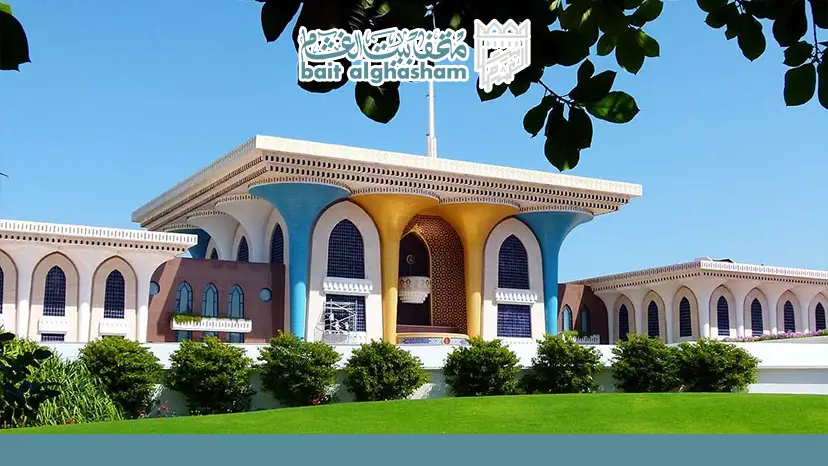
The most defining feature of the palace is the palace’s gold and blue facade, which sets it apart from traditional Omani mud-brick and white plaster architecture.
- Vibrant Pillars: The facade is supported by striking, flared flared columns finished in vivid turquoise blue and polished gold accents, creating an unforgettable visual entrance.
- Artistic Details: Geometric arabesque motifs, intricate marble inlay work, and polished gold crests adorn the exterior walls and gates.
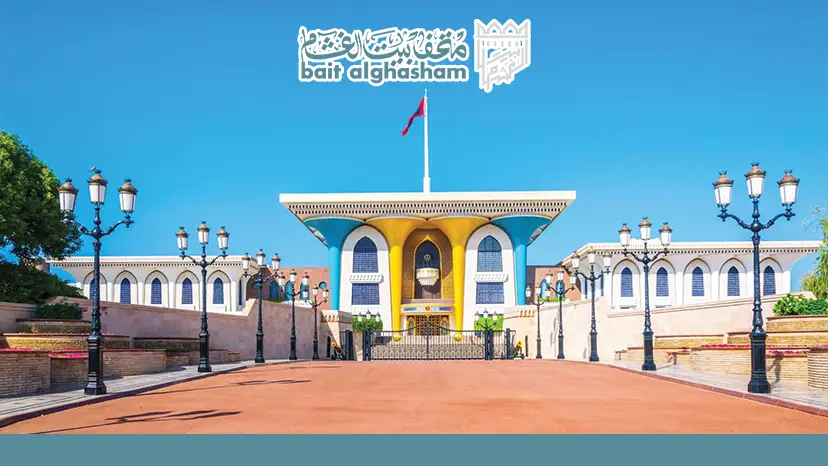
- Landscape Design: The approach to the palace features a vast, marble-paved palace square flanked by manicured gardens, polished black iron gates, and regal palm trees.
Can Visitors Enter the Palace?
A common question among travelers planning a trip to Old Muscat is whether public access is permitted inside the royal grounds:
- Exterior Views Only: No, visitors are not allowed inside the palace interior. Because it remains an active ceremonial residence for the Sultan, the interior halls and grounds are strictly closed to the general public.
- Exploring the Courtyard: Visitors are welcome to walk freely through the outer boulevard, the grand marble plaza, and right up to the wrought-iron front gates to admire the architecture up close.
The Best Spot to Take Photos in Al Alam Palace Muscat
Capturing memorable exterior photography of Al Alam Palace is a highlight of exploring places to visit in Muscat, thanks to its unique framing and nearby historical sites.
- The Main Gate: Standing at the edge of the central marble walkway facing the main gate gives you a direct, symmetrical shot of the iconic gold and blue pillars.
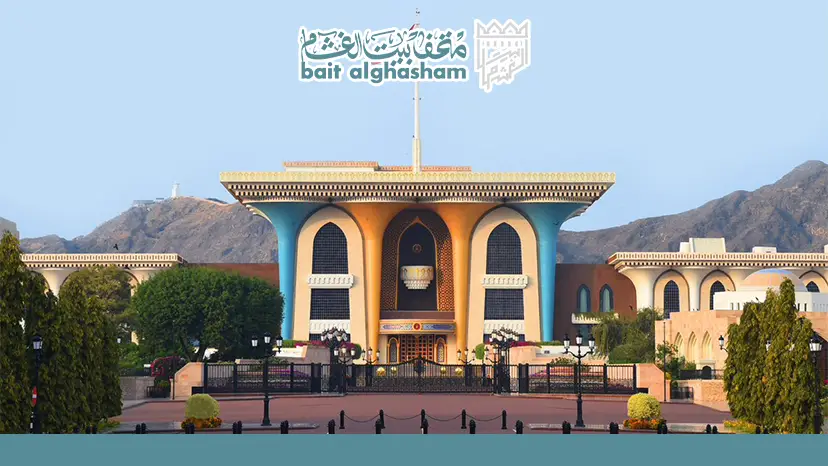
- Framing with Historic Forts: Look toward the harbor sides of the square to photograph the flanking Al Jalali and Al Mirani forts. These twin 16th-century Portuguese fortresses perch high on the surrounding cliffs, framing the royal complex against the Gulf of Oman.
- Evening Lighting: Visiting at dusk or after dark offers a stunning perspective, as dramatic floodlights illuminate the palace columns, golden crests, and surrounding mountain cliffs.
Best Time of Day to Visit Al Alam Palace Muscat
While the palace grounds are accessible 24/7, timing your visit enhances both your sightseeing experience and photography opportunities:
- Late Afternoon (Golden Hour): Visiting between 4:30 PM and 6:00 PM provides soft natural light that highlights the vivid turquoise and gold columns without severe sun glare or high mid-day heat.
- Evening Illumination: After sunset, floodlights illuminate the palace facade, iron gates, and surrounding mountain cliffs, making nighttime visits popular for romantic strolls and long-exposure photography.
- Early Morning: Early Morning: Arriving between 7:00 AM and 8:30 AM offers peaceful, crowd-free views of the grand plaza and easy parking before most Oman tours and tourist buses arrive.
Visitor Guidelines and Dress Code for Al Alam Palace Muscat
Because Al Alam Palace in Muscat is an active ceremonial residence for the Sultan and resides within an administrative government district, visitors should keep local etiquette in mind:
- Modest Attire: While there is no strict dress code enforced at the open plaza, wearing modest clothing that covers shoulders and knees is recommended as a sign of respect for local Omani customs.
- Respect Security Boundaries: Visitors may walk right up to the front wrought-iron gates, but must refrain from crossing marked security lines, climbing perimeter walls, or attempting to enter private government side-streets.
- Comfortable Footwear: The grand marble courtyard leading from the parking areas to the palace gates requires a short walk, so wearing comfortable walking shoes is ideal.
To delve deeper into Oman’s historic defenses near Old Muscat, take time to Explore Archaeological Landmarks.
Nearby Attractions to Combine with Your Visit
Al Alam Palace sits at the center of Old Muscat’s historic core, making it one of the top things to do in Oman when creating a comprehensive half-day cultural walking tour:
- The National Museum of Oman: Located directly opposite the palace plaza, this modern museum houses world-class exhibits showcasing Omani maritime history, royal artifacts, and ancient archaeology.
- Bait Al Zubair Museum: A short walk from the palace, this restored Omani heritage house displays traditional weaponry, jewelry, costumes, and historical household items.
- Mutrah Corniche and Souq: Located a 5-minute drive away, this vibrant waterfront promenade and historic covered market are famous for frankincense, Omani silver, spices, and traditional handicrafts.
Looking to explore more historic Omani residences?
Pair your visit to Al Alam Palace with a trip to South Al Batinah to Discover Bait Al Ghasham Museum, a magnificent 200-year-old museum-mansion that reveals the rich domestic life and architectural artistry of Oman’s historic leaders.
Frequently Asked Questions About Al Alam Palace
Where is Al Alam Palace located?
Al Alam Palace is located in Old Muscat, Oman, positioned between the Al Hajar Mountains and the harbor of the Gulf of Oman, just a short drive from the Mutrah Corniche and Mutrah Souq.
Is there an entrance fee to visit Al Alam Palace?
No, there is no entrance fee. Visitors can explore the public palace square, gardens, and gate area free of charge.
How do you reach Al Alam Palace from Mutrah?
It is a scenic 5-to-10-minute drive (approximately 4 km) from the Mutrah Corniche via Al Riyam Street, passing scenic coastal vistas and historic watchtowers.
Can visitors enter Al Alam Palace?
No, public access inside the palace is not permitted. Because Al Alam Palace serves as an active ceremonial residence for His Majesty the Sultan and is used for official state functions and foreign receptions, the interior halls and private gardens remain strictly closed to the public. However, visitors are welcome to walk through the grand marble square right up to the wrought-iron front gates to admire and photograph the exterior architecture up close.
Why is it called Al Alam (‘The Flag’)?
The name Al Alam translates directly to “The Flag” in Arabic. The palace earned this title because the national flag of the Sultanate of Oman is prominently hoisted atop the main flagpole of the royal residence, signaling the ceremonial presence and authority of the Sultan at the heart of the capital.
Where is the best photo spot?
The prime photo location is in the center of the grand marble plaza facing the main wrought-iron gate. Standing here gives you a perfectly symmetrical, wide-angle shot of the iconic turquoise-and-gold columns framing the royal entrance. For a broader panoramic perspective, step slightly back along the central walkway to capture both the palace and the historic Al Jalali and Al Mirani forts perched on the surrounding rocky cliffs.