
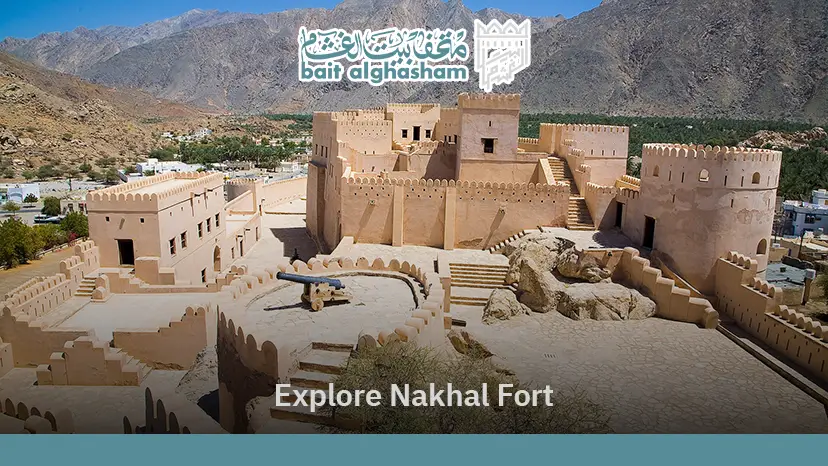
Nakhal Fort stands out as one of the most distinctive forts in Oman, as it is built directly atop irregular rocky formations, creating a striking harmony between architecture and nature.
Its history spans over 1,500 years, reflecting multiple eras of Omani defense, leadership, and cultural evolution.
Today, it offers visitors a unique experience that blends historical depth with breathtaking panoramic views, making it a standout destination for those exploring tourism in Oman.
What is Nakhal Fort?
nakhal fort oman is a magnificently restored 17th-century fortification located in the Al Batinah Governorate, famously built around a massive irregular rock formation.
This historic stronghold sits atop a rocky hill, serving as a silent witness to over 1,500 years of Omani history and resilience.
Today, this iconic (Oman Fort) operates as a vibrant museum that showcases traditional Omani life through its preserved artifacts and military architecture.
Its unique design perfectly integrates natural boulders into its interior, making it one of the most distinctive historical sites in the Sultanate.
Location of Nakhal Fort in Nakhal, Oman
Finding the exact Nakhal Fort location is simple for travelers looking to explore the beauty of the Al Batinah South Governorate:
- Distance from Capital: It is situated approximately 120 km west of Muscat, making it an ideal destination for a day trip.
- Geographic Setting: The fort lies at the foot of Jebel Nakhal, which is a prominent spur of the Western Hajar Mountains.
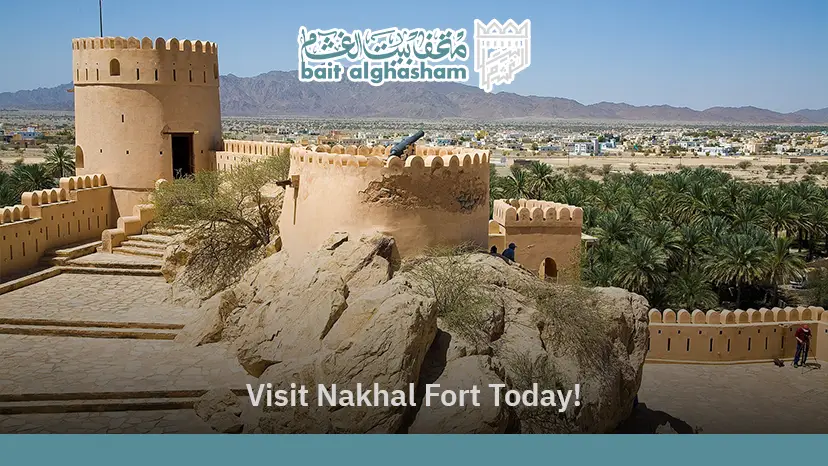
- Oasis Surroundings: It is strategically positioned overlooking vast, lush green palm orchards that define the Wilayat of Nakhal.
- Proximity to Nature: The site is just a five-minute drive from the famous “Ain Al Thawarah” hot springs.
- Town Entrance: You can easily spot the fort at the entrance of Nakhal village, where it towers over the traditional residential areas.
Architectural Design of Nakhal Fort
The architectural brilliance of nakhal fort oman lies in its organic flow with the rugged Omani landscape:
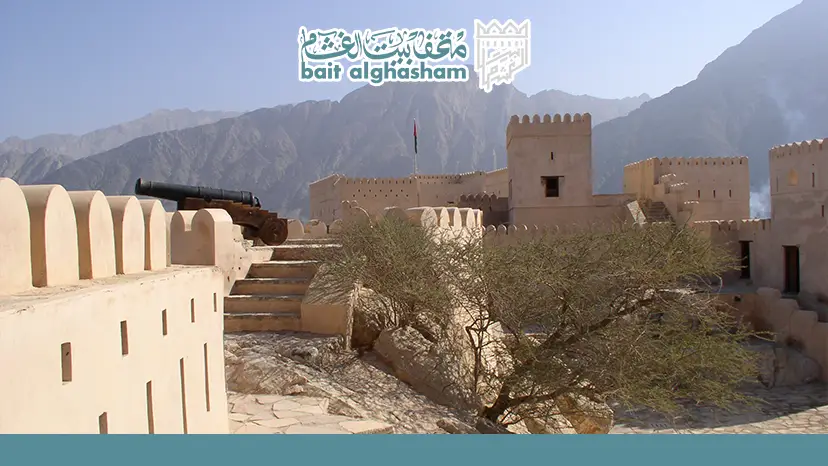
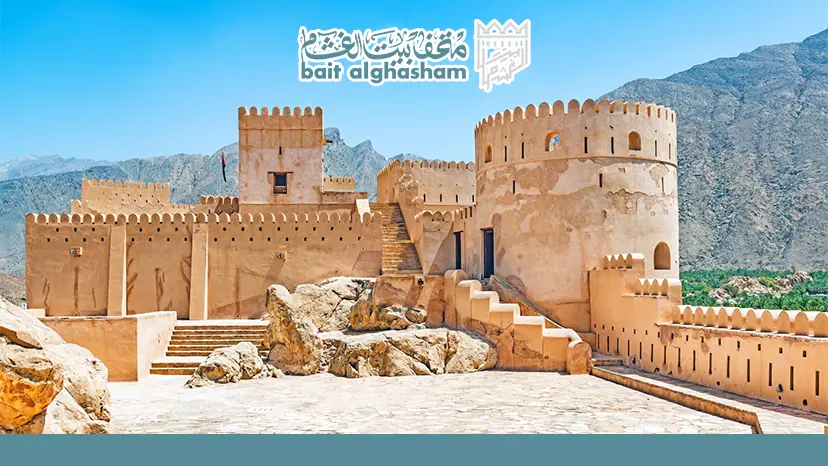
- Irregular Base: Unlike the symmetrical design of (Bahla Fort), Nakhal flows with the natural uneven terrain of the mountain.
- Three Distinct Levels: The interior is divided into levels for storage, administration, and private living quarters for the Wali.
- Traditional Materials: Omani builders utilized local mud-brick, stone, and palm wood to ensure the structure remained cool in summer.
- Defensive Spiked Doors: The main entrance features massive wooden doors with iron spikes to repel historical battering rams.
- Six Robust Towers: The fortress is reinforced by six large cylindrical towers that provided 360-degree surveillance of the valley.
Why Nakhal Fort Was Built on a Rocky Hill
Building a fortress on a rocky elevation was a masterstroke of Omani military engineering for several reasons:
Commanding View of the Oasis
The elevated position provided the garrison with a bird’s-eye view of the vital palm groves and water sources. This ensured that no enemy could approach the village or the oasis without being spotted from miles away.
Natural Rock Integration
By building directly onto massive boulders, the engineers made the fort’s foundation nearly impossible to undermine. In some rooms, you can still see the natural rock jutting through the floors, acting as a permanent wall.
Superior Defensive Advantage
The steep rocky hill acted as a natural barrier, forcing invaders to climb difficult terrain while under fire from the ramparts. This height made it a formidable “Husn” (stronghold) that was very difficult to capture during tribal conflicts..
Read also: Nizwa Fort
Things to Do at Nakhal Fort
A visit to nakhal fort oman is more than just a history lesson; it is an adventure into Omani culture:
- Explore the Weapons Museum: View a rare collection of traditional swords, daggers (Khanjars), and historical firearms.
- Capture Stunning Photography: Use the unique rock-integrated walls as a backdrop for your travel memories.
- Visit the On-site Mosque: Experience the simple and peaceful prayer area located within the fortress walls.
- Relax at Ain Al Thawarah: After your tour, visit the nearby hot springs for a relaxing dip in mineral-rich waters.
- Walk through the Oasis: Stroll through the palm plantations at the base of the fort to see the ancient Falaj irrigation system.
Explore also: Al Mirani Fort
Best Time to Visit Nakhal Fort
To ensure your trip to nakhal fort oman is comfortable, consider these timing tips:
The Cooler Winter Months
The absolute best time to visit is from October to April when the weather is pleasantly cool. This makes climbing the steep stairs of the fort much more enjoyable than during the humid summer.
Early Morning for Soft Light
Arriving right at 8:00 AM allows you to avoid the crowds and capture the best lighting for your photos. The morning sun highlights the textures of the mud-brick walls and the mountain backdrop.
Late Afternoon for Sunsets
The golden hour before closing (around 4:00 PM) offers a magical atmosphere as the sun sets behind the Hajar Mountains. The fort takes on a warm glow that is perfect for professional-style photography.
Weekday vs. Weekend Dynamics
Plan your visit on a weekday (Sunday to Thursday) for a quieter, more personal experience. Weekends in Oman (Friday and Saturday) usually attract many local families and large tour groups.
Avoiding Midday Summer Heat
If you must visit between May and September, try to stay in the shaded interior rooms. The rooftop and towers can become extremely hot during the midday hours in the summer.
Learn more about: Mutrah Fort
How to Reach Nakhal Fort from Muscat
Getting to the Nakhal Fort location is a straightforward journey from the capital city:
- Car Rental (Recommended): Driving yourself is the easiest option, taking about 1 hour via Route 13 towards Barka.
- Taxi Services: You can hire an Otaxi or a private taxi for a round trip, costing approximately 15 to 40 OMR.
- Guided Day Tours: Many Muscat-based operators offer full-day trips that combine Nakhal with the hot springs and Wadi Mistal.
- Public Transport: You can take a Mwasalat bus to Barka and then catch a local taxi for the final 25-minute leg of the trip.
- Ample Parking: Once you arrive, there is a large parking area at the base of the fort with easy access to the entrance.
In conclusion, Nakhal Fort stands as a timeless symbol of Omani resilience and architectural genius, harmonizing history with the rugged beauty of the natural landscape.
Frequently Asked Questions
How old is Nakhal Fort?
While the current structure was extensively rebuilt in the 17th century, its origins date back over 1,500 years to the pre-Islamic era.
What is special about Nakhal Fort?
It is unique because it is built directly onto irregular massive boulders rather than a flat foundation, perfectly blending architecture with natural geography.
Is Nakhal Fort open to tourists?
Yes, it is generally open daily from 8:00 AM to 4:00 PM (Fridays may have different hours), and it serves as a fully restored museum.
Where is Nakhal Fort located?
It is located in the Wilayat of Nakhal, South Al Batinah Governorate, approximately 120 km from Muscat.
Read More in Arabic: شواطئ عمان السياحيه
Read More in Arabic: لاشخره
Read More in Arabic: اين تقع ولاية نخل